

By David Akinadewo-Adekahunsi
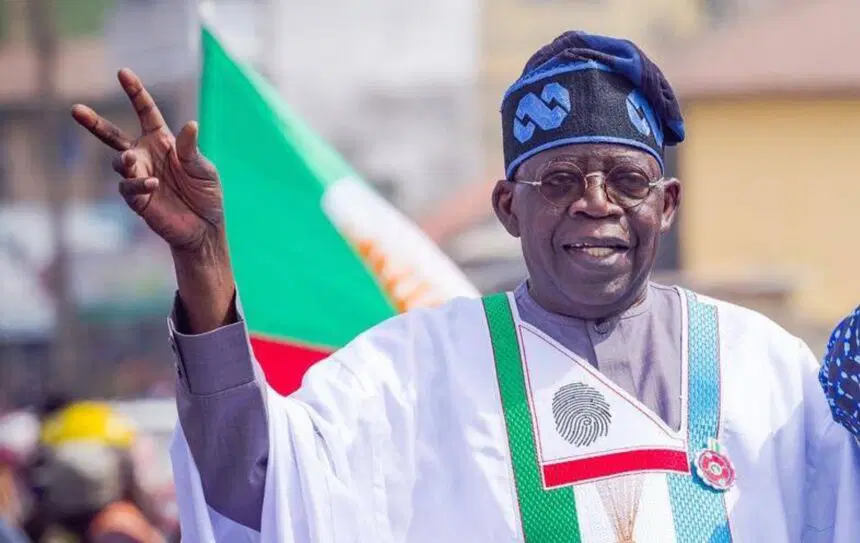
In a resounding message of unity and regional cooperation, President Bola Ahmed Tinubu has reiterated Nigeria’s unwavering support for Mali’s democratic transition and the strengthening of bilateral ties across West Africa.
Receiving the Letter of Credence from Mali’s new Ambassador to Nigeria, Cheick Oumar Coulibaly, at the State House in Abuja on Thursday, the President made a clarion call for solidarity among West African nations, insisting that no country can thrive in isolation.
“We should strengthen our bilateral relations, and it is hoped that Mali will achieve its democratic goals. We are open to any support we can render. I want you to see yourself as a member of the family here,” President Tinubu stated, underscoring Nigeria’s readiness to assist Mali in its democratic journey.
He stressed that despite the differing political alignments, particularly the stance of the Alliance of Sahel States (AES), unity remains the cornerstone of progress for the region.

According to him: “For me, we are one in West Africa and Africa. The AES has made its position clear, but no nation can succeed alone. We see Mali as a brother and are ready to collaborate and exchange ideas.”
Ambassador Coulibaly conveyed the warm greetings and deep appreciation of Malian Head of State, General Assimi Goïta, applauding Nigeria’s enduring leadership role on the continent and its steadfast commitment to peace through the deployment of troops in various United Nations peacekeeping operations.
“The Head of State particularly told me that I was on a mission to the biggest country in Africa. He said he knows it’s not easy, but I should look for solutions as a diplomat. We know that Africans must solve African problems,” he said, commending Tinubu’s pan-African leadership.

Beyond Mali, President Tinubu welcomed envoys from five other countries, using the occasion to advocate for stronger international cooperation in tackling global challenges and promoting prosperity.
He received letters of credence from Ambassador Bengt Van Loosdrecht of the Kingdom of the Netherlands, High Commissioner Selestine Gervas Kakele of the United Republic of Tanzania, non-resident Ambassador Dr Sabit Subasic of Bosnia and Herzegovina, Ambassador Andrey Leonidovich Podelyshev of the Russian Federation, and Ambassador Patrick Egloff of Switzerland.

In his engagement with Tanzania’s envoy, Tinubu expressed admiration for President Samia Suluhu Hassan’s progressive leadership and highlighted the potential of increased collaboration in education, technology, and culture.
He acknowledged Nigerian businesses making significant inroads in Tanzania, with High Commissioner Kakele citing the presence of giants like Dangote Group, UBA, GTB, and Sahara Energy.

“We should strengthen collaboration not only government to government but also people to people as we see in the film industry and sports,” Kakele said, referencing Nollywood’s growing ties with Tanzania’s entertainment sector.
Turning to Russia, Tinubu emphasised the importance of deepening Nigeria’s long-standing technical alliance with Moscow, particularly in the areas of steel production and energy.
He singled out the Ajaokuta Steel Complex, a landmark but underutilised infrastructure project originally constructed by Russian firms as a priority for revival.

“Our partnership has been fulfilling, but we need more technological support with our rapidly growing population,” Tinubu noted.
Ambassador Podelyshev reaffirmed Russia’s commitment to expanding collaboration, especially in education and nuclear energy.
With Swiss Ambassador Patrick Egloff, President Tinubu reiterated Nigeria’s intention to implement reforms that would foster a more investor-friendly climate, including legal and regulatory improvements to reduce litigation risks.
Ambassador Egloff spoke of the increasing footprint of Swiss firms like Nestlé and Lafarge in key Nigerian states, and praised bilateral efforts on security and intelligence.

Meanwhile, Bosnia and Herzegovina’s Ambassador, Dr Sabit Subasic, urged President Tinubu to consider an official visit to his country to witness its post-conflict transformation firsthand.
Tinubu expressed gratitude for the deepening of relations between the two nations.