
By David Akinadewo-Adekahunsi
For centuries, the Alaafin of Oyo occupied a pre-eminent position in the political, military and cultural evolution of the Yoruba nation, presiding over one of the most formidable empires in pre-colonial West Africa. From its inception around the 14th century, the Oyo Empire grew into a vast and sophisticated state whose influence stretched across present-day southwestern Nigeria and into parts of the Republic of Benin and Togo, anchored by a powerful cavalry, an elaborate administrative system and clearly defined territorial boundaries.
At the heart of this imperial structure was the Alaafin, traditionally regarded as a direct descendant of Oduduwa, the progenitor of the Yoruba race, combining sacred authority with political leadership and ruling through a complex system of checks and balances involving the Oyo Mesi and the Ogboni.
Successive Alaafin played decisive roles in ensuring the security of lives and property and in preserving the territorial integrity of the Yoruba nation. Under rulers such as Alaafin Ajaka, Sango, Abiodun and others, Oyo evolved a disciplined military system that defended the empire against external aggression, maintained internal order and exercised authority over vast vassal territories.
The establishment of Ibadan in the early 19th century as a military camp and later headquarters of Oyo warriors underscored this reality, as the town served as a strategic outpost for the defence of the Yoruba nation. Even after the collapse of the Oyo Empire, these same warriors and their descendants played key roles in resettling Oyo people displaced by war, reinforcing the historical bond between the Alaafin and many Yoruba sub-polities.
The collapse of the Oyo Empire in the 19th century, brought about by internal conflicts, constitutional strains and external pressures, has often been used as a justification to downplay the historical status of the Alaafin.
However, the fall of an empire has never equated to the erasure of its royal institution. Across the world, empires have risen and fallen, yet the positions once occupied by their leaders remain sacred and revered.
In Nigeria, the Oba of Benin continues to command unmatched reverence in Edo State long after the fall of the Benin Empire, with no other Oba laying claim to equal status. By this same logic, the decline of Oyo as an empire cannot be a valid basis for rewriting the historical supremacy of the Alaafin in Yorubaland.
The politicisation of traditional institutions in the Western Region marked a major turning point in this long-established order. Many historians and traditionalists trace the deliberate reduction of the Alaafin’s influence to decisions taken during the administration of the late Chief Obafemi Awolowo as Premier of the Western Region.
The elevation of the then Ooni of Ife, Sir Adesoji Aderemi, to prominent political and ceremonial roles is widely seen as the beginning of a policy that placed one traditional institution against another, thereby weakening the collective authority of Yoruba monarchy and fuelling rivalry that has persisted for decades. Supporters of the Alaafin maintain that while the Alaafin’s descent from Oduduwa is deeply rooted in Yoruba history and oral tradition, there is no conclusive historical evidence establishing the Ooni as a blood descendant of Oduduwa, making claims of equal or superior status a matter of political convenience rather than historical fact.
Recent developments in Oyo State have further reignited this debate. The decision by the administration of Governor Seyi Makinde to strip the Alaafin of his long-standing position as permanent chairman of the Oyo State Council of Obas and replace it with a rotational chairmanship shared with the Olubadan of Ibadan and the Soun of Ogbomoso has been described by critics as a direct affront to the Alaafin stool.
Historically, Ibadan was founded by warriors of the Alaafin and served as the military headquarters of the Yoruba nation, while Ogbomoso similarly rose within the framework of Oyo’s military expansion. That these settlements later emerged as powerful centres following the collapse of the empire does not, according to traditionalists, confer equal historical rights with the stool that once exercised imperial authority over them.
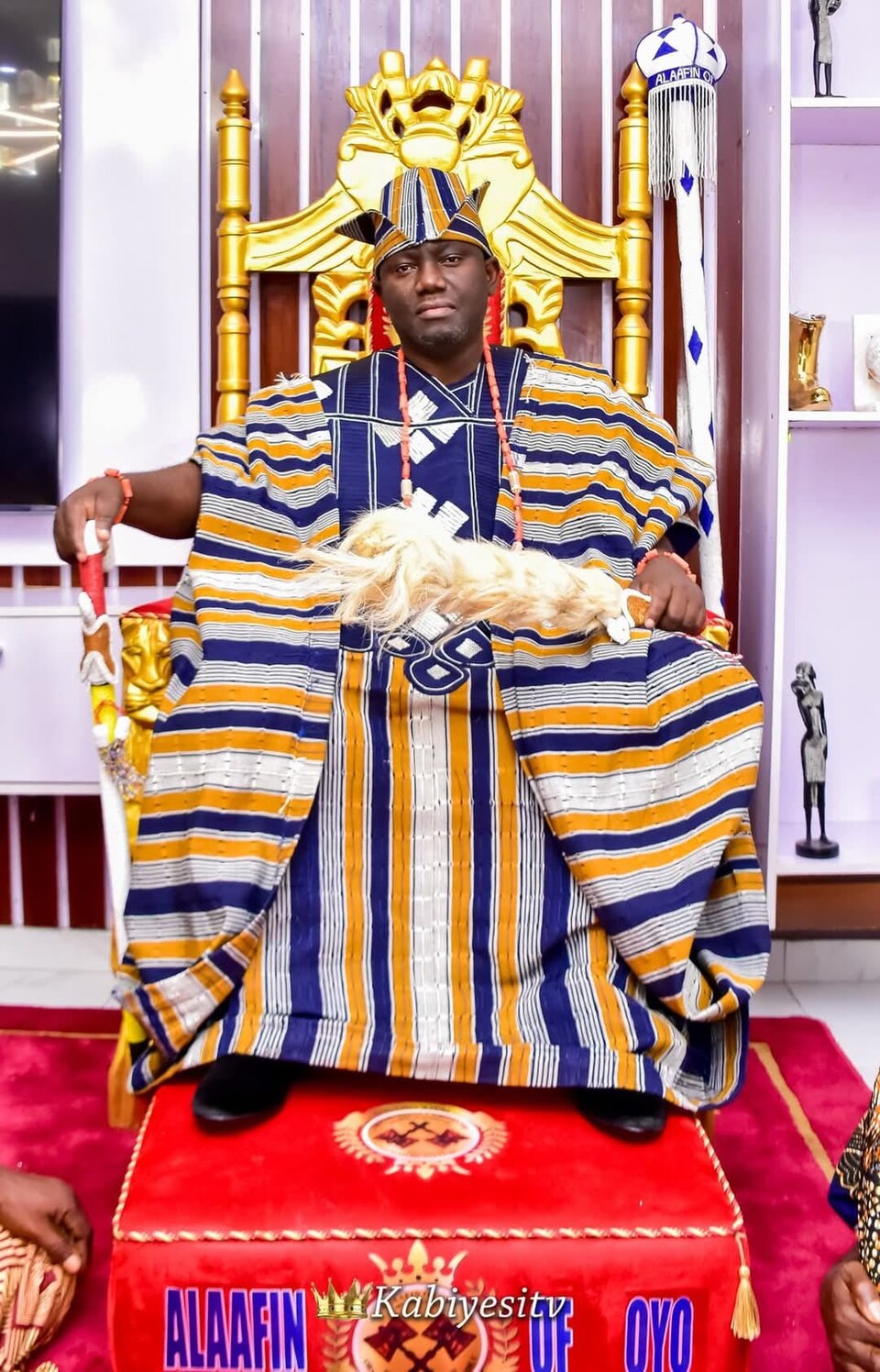
The late Alaafin of Oyo, Oba Lamidi Olayiwola Adeyemi III, devoted much of his reign to defending the historical status and supremacy of the Oyo throne. His passing and the subsequent enthronement of Oba Akeem Owoade as the current Alaafin have coincided with intensified scrutiny and what many describe as a coordinated attempt to further diminish the influence of the stool. Narratives suggesting that empires have given way to modern global structures, that no Oba is superior to another, or that the Ooni of Ife is the head of all Yoruba Obas are increasingly deployed to challenge the historical primacy of the Alaafin.
At the core of this controversy lies a fundamental question of historical integrity. Advocates of the Alaafin’s supremacy insist that the Yoruba of today must look beyond politics, sentiment and personal preference and return to verifiable historical facts. While recognising the dignity and importance of all Yoruba traditional rulers, they argue that the Alaafin of Oyo remains the symbol of Yoruba imperial heritage and authority, and that the collapse of an empire should never be used as a tool to erode the sanctity of its throne.
As Oba Akeem Owoade navigates the complex intersection of tradition and modern politics, many believe his defining challenge will be to ensure that the historic status of the Alaafin stool is preserved and not diminished by political expediency or targeted onslaughts masked as reform.
David Akinadewo-Adekahunsi is a journalist, musician, author, and cleric based in Ondo State, Nigeria. He writes on issues of faith, culture, governance, and social justice.