
By Duchess Ifeoluwa
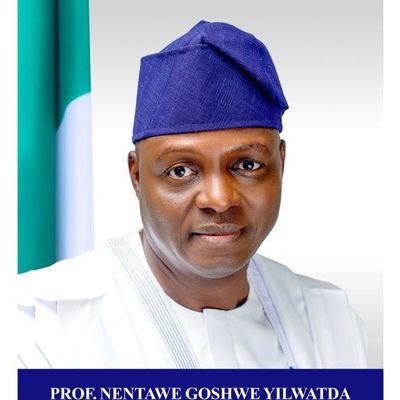
The National Chairman of the All Progressives Congress (APC), Professor Nentawe Yilwatda, has commended the 36 state governors and all 36 State Houses of Assembly for supporting the proposed constitutional amendment to establish State Police Services in Nigeria.
Yilwatda described the unanimous endorsement by the state legislatures as a landmark development in the country’s democratic process and a demonstration of political maturity, national consensus and cooperation among the different tiers of government.
The APC national chairman made the remarks during a meeting with party stakeholders in Abuja, according to a statement issued by his Special Adviser on Media and Information Strategy, Abimbola Tooki.
He said the support of all 36 State Houses of Assembly represented a collective commitment to addressing one of the country’s most pressing challenges: the protection of lives and property.
Yilwatda particularly commended the governors for their disposition and constructive engagement throughout the process, as well as the Speakers and members of the state legislatures for recognising the urgency of the proposed security reform.
He said the willingness of states, irrespective of their political affiliations, to support the amendment demonstrated that national security transcended partisan considerations and remained a collective responsibility.
The APC chairman noted that the proposed establishment of State Police Services formed part of President Bola Tinubu’s broader reform agenda to build a more responsive and effective security architecture.
According to him, the country’s security challenges have exposed the limitations of an overly centralised policing structure in responding adequately to the peculiar security realities of different communities and geographical locations.
He said state police would provide an additional layer of policing, bringing security administration closer to the people and enabling authorities to respond more promptly to threats within their jurisdictions.
Under the proposed framework, he explained, state governments would have greater institutional capacity to complement the Federal Police Service in crime prevention, intelligence gathering, maintenance of law and order, and protection of communities.
Yilwatda identified improved grassroots intelligence gathering, faster response to security emergencies, more effective community policing and stronger collaboration between federal and state security institutions as some of the anticipated benefits.
He added that the proposed arrangement could strengthen efforts to tackle kidnapping, banditry, communal violence, armed robbery, terrorism and other criminal activities threatening the safety and economic well-being of Nigerians.
The APC chairman, however, stressed that the success of the initiative would depend on professionalism, adequate training, accountability, respect for fundamental human rights and strict adherence to constitutional provisions.
He warned that State Police Services must remain institutions established to protect citizens and enforce the law, rather than instruments of political intimidation or partisan interests.
Yilwatda also commended President Tinubu for what he described as his courage and determination to address the country’s security challenges through institutional reforms and practical solutions.
He said the President’s approach reflected an understanding that the primary responsibility of government was to protect lives and property, adding that every Nigerian deserved to live in safety, dignity and peace, irrespective of geographical location, ethnic background, religious affiliation or political persuasion.
He maintained that security should not be treated as a privilege reserved for residents of major cities or particular regions, insisting that people in rural communities, farming settlements and border towns also deserved adequate protection.
Yilwatda expressed confidence that, with the completion of the constitutional process and appropriate implementation safeguards, State Police Services would strengthen national security and restore public confidence in the country’s policing system.
The APC chairman also linked the proposed reform and other ongoing institutional and economic changes to the need for continuity in leadership under President Tinubu.
With the 2027 general elections approaching, he urged Nigerians to assess the direction of the country based on the policies, decisions, institutional reforms and commitments of the present administration.
He argued that nation-building required courage, consistency, experience and the willingness to confront difficult challenges, rather than abandoning necessary reforms when they became politically inconvenient.
Yilwatda consequently called on Nigerians across the 36 states and the Federal Capital Territory to vote for Tinubu’s re-election, saying continuity would provide an opportunity to consolidate ongoing reforms, strengthen the security architecture, deepen economic recovery, improve infrastructure and expand opportunities for young people.
He described the forthcoming election as a choice between sustaining the present administration’s reform programme and considering political alternatives, which he said should be assessed against their records in public office.
The APC national chairman also cautioned against entrusting the country’s future to political actors whose ambition to occupy the highest political office, according to him, was not matched by credible and sustainable solutions to Nigeria’s challenges.
He argued that the ambition to become President was not, in itself, sufficient qualification for leadership, stressing the importance of vision, capacity, courage and a demonstrable record of responsible governance.
Yilwatda urged Nigerians to examine the records of those seeking their mandate, asking what they achieved when they had opportunities to govern, the institutions they built and the solutions they provided to the country’s economic and security challenges.
He warned against what he described as political nostalgia, personal ambition and desperation for power, insisting that the country’s future should be determined by credible leadership and sustainable development.