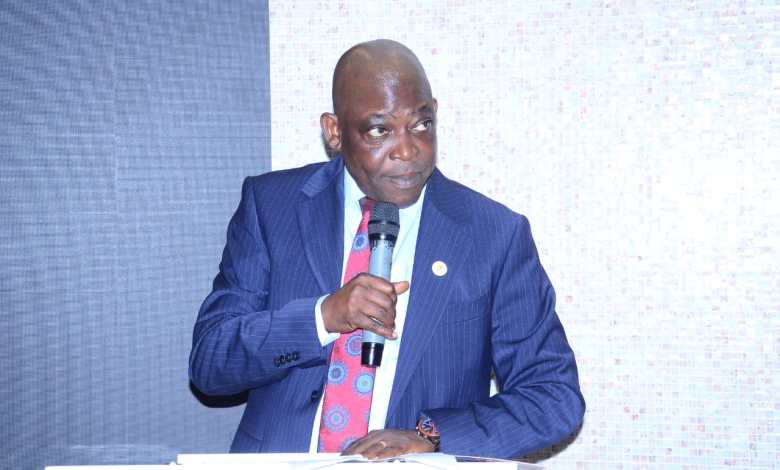


By David Akinadewo-Adekahunsi
The burial of Evang. Bunmi Akinnaanu (popularly known as Omije Ojumi), which took place in Lagos on Thursday, was meant to be a quiet, family-only affair. Instead, it degenerated into a public spectacle whose aftershocks continue to reverberate across social media, reopening painful questions about family responsibility, parental alienation, and the dangers of publicising private grief.
What should have been a solemn farewell was overshadowed by open confrontation between the deceased’s husband’s family and her children. Videos from the burial and earlier programmes quickly found their way online, provoking intense reactions.
Many commentators hastily took sides, with a dominant narrative portraying the husband as an absentee father, especially after reports that the children refused to speak with him when he called from abroad to pay his last respects.
Some argued that the call itself was ill-timed, given the children’s grief and emotional vulnerability. Others, however, believe the father had little choice but to respond publicly, following the damaging remarks made by the couple’s first child, Jomiloju, during the Service of Songs held on Wednesday, a day before the burial.
At that event, tension had already begun to build when members of the husband’s family were reportedly disallowed from speaking. In an emotionally charged moment, Jomiloju openly accused her father of abandoning the family for years and neglecting their welfare.
More troubling was her public prayer that her younger brother would not “end up like their father,” whom she described as having left them without care. Such statements, made in a public religious gathering, went beyond personal grief and crossed into open disparagement.
What was particularly concerning was the apparent silence of elders and organisers at the programme. Within African cultural norms, such sensitive family matters are traditionally handled discreetly, with elders intervening to prevent escalation.
Allowing these remarks to stand unchallenged, and subsequently permitting their circulation online, represented a failure of moral and cultural responsibility. The long-term emotional implications for the children themselves, as well as their surviving parent, were clearly not considered.
It is important to state that Bunmi Akinnaanu remained legally married to her husband until her death, as there was no divorce. Under such circumstances, no reasonable father would ignore a viral video in which his integrity and parental responsibility were publicly questioned, particularly when members of his extended family were present at the event.
From available indications, the father had made several attempts to reach his children prior to the burial, all of which reportedly failed. This raises legitimate concerns about whether unresolved marital grievances were allowed—perhaps even encouraged—to harden into resentment against him.
Amid the growing tension, credit must be given where it is due. The President of the Gospel Musicians’ Association of Nigeria (GOMAN), Evang. Philip Olayiwola (Pholat), alongside his leadership team, made genuine and commendable efforts to prevent the situation from spiralling completely out of control.
On the burial day, Evang. Olayiwola intervened decisively, holding several meetings with the visibly enraged members of the husband’s family. These engagements, marked by patience and pastoral restraint, ultimately helped to douse the tension and avert what could have become a more serious confrontation.
That said, while the father’s consent before the final interment of his wife was non-negotiable, the burial ceremony itself was not the appropriate forum for him to detail marital disputes or defend past actions.
Such explanations, however sincere, were bound to be counterproductive in the emotionally charged atmosphere of burial rites. Ideally, he ought to have pursued custody or legally structured co-parenting arrangements much earlier, if reconciliation proved impossible.
Sadly, the harsh and sometimes reckless attacks on social media—some of them defamatory—have now provoked the father into revealing disturbing details about the marriage. One must ask: does this serve the memory of the deceased? Does it heal the children, or compound their trauma? Will it bring peace to either family?
The fallout also affected the wider gospel music community. Several gospel musicians reportedly stayed away from the burial due to the family crisis, yet they too have been unfairly dragged online for not honouring their colleague. This again illustrates how unchecked narratives, once released into the digital space, can lead to collective injustice.
At this point, restraint, not rage, is required. The Akinnaanu family must be allowed the space to resolve their internal matters privately, with wisdom, counsel and compassion.
The children, no matter how hurt, should be guided to understand that public disrespect toward a surviving parent carries long-term emotional and moral consequences. An apology, offered in humility, would be a step toward healing—not a defeat.
Online sympathy and emergency relatives may offer temporary comfort, but time has a way of thinning such crowds. In the end, it is the surviving parent who remains permanently invested in the children’s future.
May God grant healing, wisdom and preservation to the children and their father, and may the soul of Evang. Bunmi Akinnaanu rest in perfect peace.
David Akinadewo-Adekahunsi (Aremolekun) is a journalist, musician, author, and cleric based in Ondo State, Nigeria. He writes on issues of faith, governance, and social justice.
Email: aremolekun@yahoo.com
08082870456