

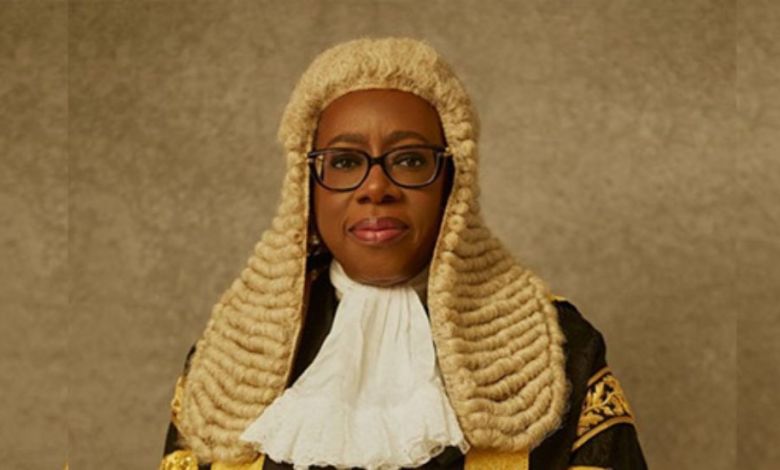
…Kekere-Ekun urges judicial officers to prepare for AI-generated deepfakes, complex digital evidence
By Our Reporter
The Chief Justice of Nigeria (CJN), Justice Kudirat Kekere-Ekun, has sworn in 375 judicial officers appointed to serve as members of the Election Petition Tribunals for the 2027 general elections, warning political parties, lawyers and media organisations against attempts to intimidate judges or drag the judiciary into partisan politics.
The swearing-in ceremony took place on Monday, at the Body of Benchers Auditorium in Abuja. It coincided with the unveiling of the second edition of the Judicial Electoral Manual and the commencement of a capacity-building workshop for the newly inaugurated tribunal members.
Addressing the judicial officers, Kekere-Ekun urged them to uphold judicial independence, resist political pressure and discharge their responsibilities without fear or favour, while ensuring that election petitions were handled efficiently and without unnecessary delays.
She stressed that the credibility of democracy depended not only on the conduct of elections but also on the existence of impartial, effective and timely mechanisms for resolving electoral disputes.
“The credibility of democracy depends on the conduct of elections and the existence of impartial, effective, and timely mechanisms for resolving electoral disputes,” the CJN said, adding that the quality of decisions delivered at the tribunal level was fundamental to public confidence in the judiciary.
The Chief Justice also cautioned political parties, legal practitioners and media organisations against actions capable of undermining the integrity of the judicial process, urging them to respect the courts and allow judges to perform their duties without intimidation or undue influence.
Addressing emerging challenges in election litigation, Kekere-Ekun noted that the increasing use of technology in the electoral process had introduced new complexities for judicial officers.
She cited the Bimodal Voter Accreditation System (BVAS) and the INEC Result Viewing Portal (IReV) as technological tools that support electoral transparency, but said judges must also be equipped to assess complex digital evidence, including possible artificial intelligence-generated deepfakes.
She emphasised the need for continuous training to ensure that tribunal members were adequately prepared to handle disputes involving electronic records and emerging technologies.
The Attorney-General of the Federation and Minister of Justice, Lateef Fagbemi (SAN), described the early inauguration of the tribunal members as evidence of the judiciary’s preparedness to ensure transparent and effective resolution of post-election disputes ahead of the 2027 general elections.
The capacity-building workshop is expected to strengthen the judicial officers’ understanding of electoral laws, procedures and emerging issues in election adjudication before the commencement of the next electoral cycle.