
By Christian Abolu
The Lagos State Government has approved an additional ₦50,000 salary support for workers in the state as part of activities marking the 2026 Workers’ Day celebration.
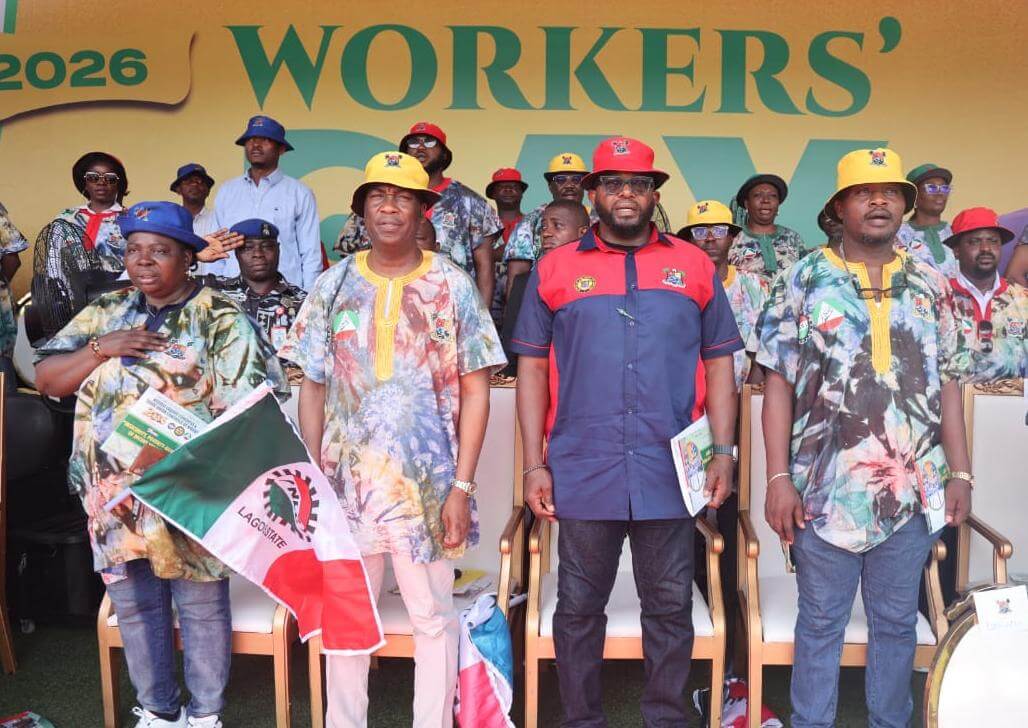
Governor Babajide Sanwo-Olu announced the intervention on Friday at the May Day event held at Mobolaji Johnson Arena, themed “Insecurity, Poverty: Bane of Decent Work.”
He said the support for the month of May was designed to mitigate the impact of rising fuel prices and other economic pressures on workers.
Represented by his deputy, Kadri Obafemi Hamzat, the governor emphasised that the welfare of workers remains central to his administration’s agenda, noting that the intervention would be subject to periodic review.
He added that the measure underscores the government’s resolve to build a functional city that works for all residents, particularly the workforce driving its growth.
“Our job has always been to make sure that the city we are building is also a city that works for you.
“We know that prices of fuel are rising. We know we did not cause the war in Iran, but we are feeling its impact. So this government has made the decision that for this May, there will be an additional ₦50,000 for every worker in Lagos State, irrespective of grades.” the governor said.
Sanwo-Olu further reaffirmed his administration’s commitment to addressing structural, policy and moral challenges confronting workers, stressing that the realities faced by the workforce require deliberate and measurable actions.
According to him, the government has, over the past seven years, implemented targeted reforms to improve welfare, dignity and productivity.
He identified long commuting hours, housing affordability and delays in retirement benefits as key concerns being addressed through policy interventions, while describing public servants as “the living infrastructure” of the state rather than mere budgetary considerations.
The governor also highlighted ongoing reforms, including the implementation of one of the highest minimum wages in the country, expansion of healthcare coverage through the Lagos State Health Management Agency, and the introduction of the Ilera Eko Easy Pay system to ease access to health insurance.
On pensions, he disclosed that the Lagos State Pension Commission has intensified prompt payments, disbursing over ₦1 billion to retirees, alongside the introduction of free first-year post-service healthcare and pre-retirement support initiatives.
He also reiterated the administration’s commitment to improving working conditions for senior civil servants through the provision of official vehicles, describing the move as part of efforts to enhance efficiency and living standards.
Sanwo-Olu commended the leadership of the Nigeria Labour Congress and the Trade Union Congress of Nigeria for maintaining constructive engagement with the government, assuring that dialogue with labour unions would remain open and continuous.
In his goodwill message, the Lagos State Head of Service, Olabode Agoro, described workers as critical partners in governance and economic development, adding that the government would continue to implement strategic measures to improve welfare and working conditions.
Also speaking, the Commissioner for Establishments and Training, Afolabi Ayantayo, commended the administration’s sustained investment in workers’ welfare, noting that prompt salary and pension payments, alongside the clearance of retirement bond backlogs, have strengthened labour relations in the state.
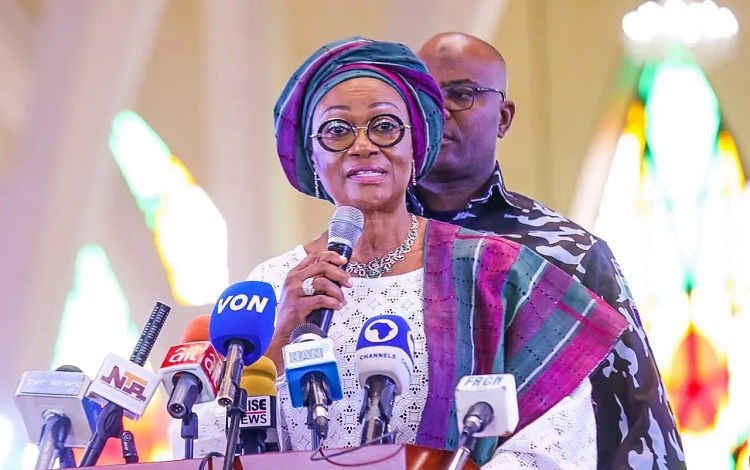
In separate remarks, the Chairperson of the Nigeria Labour Congress, Lagos State Council, Agnes Funmi Sessi, and her Trade Union Congress of Nigeria counterpart, Aladetan Abiodun, underscored the significance of the May Day celebration as an opportunity to acknowledge workers’ contributions and advance policies that promote decent work and social justice.
While commending the state government for approving the current minimum wage, the labour leaders argued that it is no longer sufficient to meet basic needs, citing inflationary pressures and the rising cost of living.
They called for an upward review of the minimum wage from ₦85,000 to ₦250,000, noting that Lagos, as Nigeria’s economic nerve centre, remains one of the most expensive cities in the country in terms of transportation, housing and food costs.