
…Aiyedatiwa says Ondo ready for State Police
By David Akinadewo-Adekahunsi
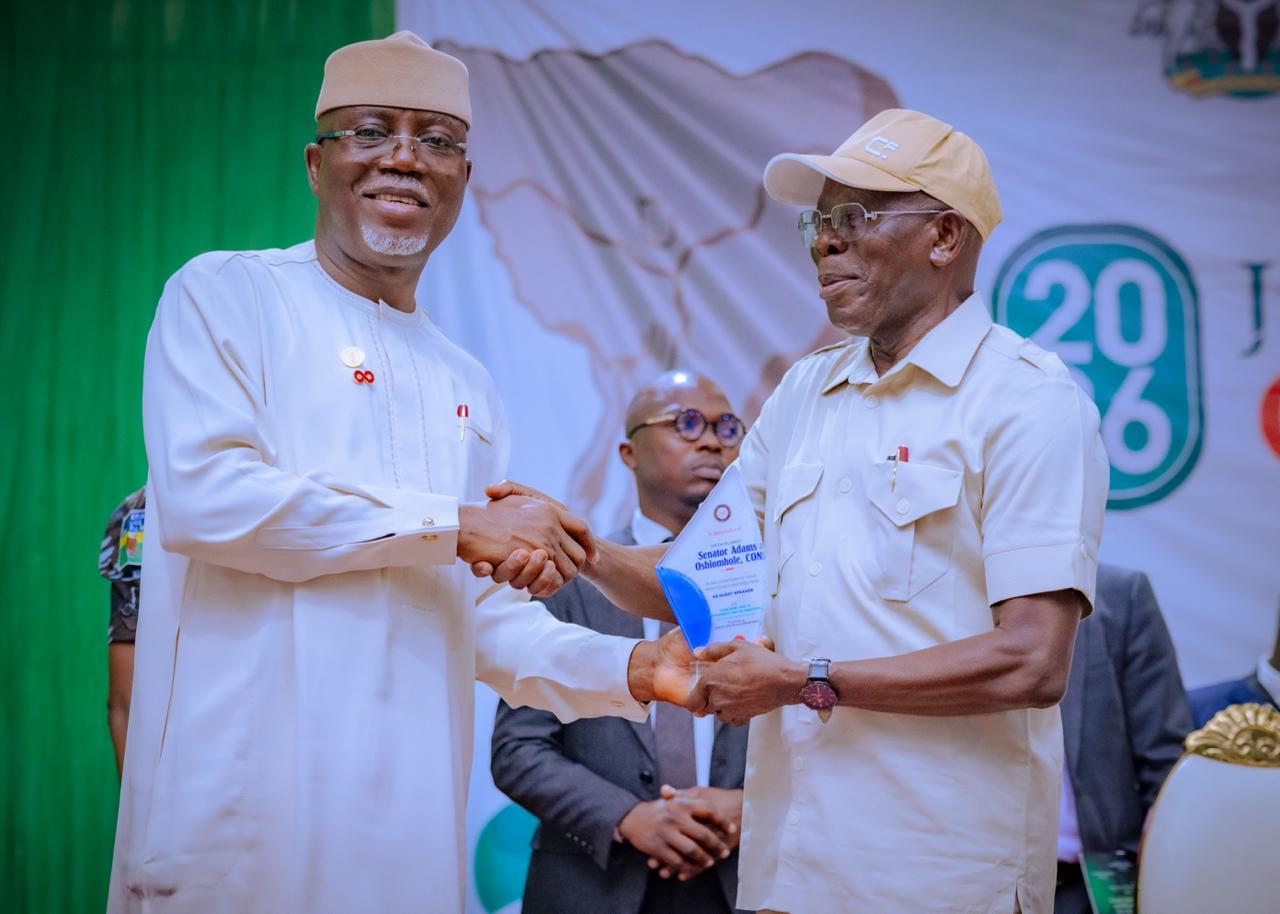
Former Edo State Governor and Senator representing Edo North, Adams Oshiomhole, on Friday called for a comprehensive overhaul of Nigeria’s security architecture, stressing that the country must continuously reform its institutions to meet emerging security challenges and strengthen democratic governance.
Oshiomhole made the call while delivering a lecture at the commemoration of the 33rd anniversary of the annulled June 12, 1993 presidential election held at the International Centre for Culture and Events (The Dome), Akure, where the Ondo State Governor, Hon. Lucky Aiyedatiwa, declared that the state was fully prepared for the establishment of state police.
The event also featured contributions from elder statesman and the Olu-Abo of Ilu-Abo, Oba Olu Falae, who warned against any return to military rule and urged Nigerians to safeguard the democratic gains achieved since 1999.
Speaking on the significance of June 12, Oshiomhole described the late Chief Moshood Kashimawo Olawale (MKO) Abiola, as a symbol of courage, resilience and democratic conviction whose sacrifice helped shape modern Nigeria’s democratic journey.
According to him, Abiola’s refusal to surrender his mandate despite pressure from military authorities transformed him into a global icon of democratic struggle.
“In celebrating Abiola, we are celebrating courage, consistency, doggedness, commitment to nation and fearlessness. He stood firm for democracy and he stood firm for Nigeria,” Oshiomhole said.
The former labour leader recalled his role as Deputy President of the Nigeria Labour Congress (NLC) during the June 12 struggle and acknowledged the role played by Falae in engagements between organised labour and the military government.
He noted that the June 12 election demonstrated an uncommon sense of national unity as Nigerians voted across ethnic and religious divides.
Oshiomhole expressed concern over the growing influence of religion in politics, warning that it often distorts political understanding and undermines national cohesion.
“Talking about June 12 is to remind ourselves that we had Nigerians who commanded respect across the North, South, East and West,” he stated.
The senator also highlighted democratic gains recorded since the return to civilian rule in 1999, citing innovations such as the Bimodal Voter Accreditation System (BVAS) and legal provisions that allow the suspension of elections where technological failures occur.
On the economy, Oshiomhole defended the reforms of President Bola Ahmed Tinubu, particularly the removal of fuel subsidy and the unification of exchange rates, describing them as necessary measures to eliminate distortions and corruption within the system.
He further supported legislative scrutiny of the Nigerian National Petroleum Company Limited (NNPCL), following audit reports alleging trillions of naira in unaccounted funds, insisting that oversight remained a constitutional responsibility of the National Assembly.
The former governor also criticised the removal of History from the school curriculum, arguing that younger generations must understand their roots and the nation’s democratic struggles.
In his remarks, Governor Aiyedatiwa described June 12 as a watershed in Nigeria’s democratic evolution and a lasting symbol of credible elections, accountability and the rule of law.
He noted that democracy remains a work in progress requiring the continuous strengthening of institutions and public confidence.
The governor said the June 12, 1993 presidential election, widely regarded as the freest and fairest in Nigeria’s history, remains a reference point for electoral integrity and democratic conduct.
According to him, insecurity continues to pose a major threat to democratic consolidation, warning that violence and instability weaken civic participation and undermine confidence in governance.
He reiterated the commitment of his administration to strengthening security across Ondo State through investments in personnel welfare, infrastructure and operational capacity.
On the debate over state police, Aiyedatiwa declared that Ondo State had already laid the foundation for a decentralised policing structure through the development of the Amotekun Corps.
“For us in Ondo State, we’ve been ready a long time. Even during the time of my late predecessor, Arakunrin Oluwarotimi Akeredolu, SAN, the structure that had been built, which I’ve also further strengthened. We have the structure, we have the people and all that is left for the approval of needed weapons and equipment,” the governor said.
He explained that although Amotekun currently possesses equipment permitted by law, additional sophisticated tools would be required to enhance its operational effectiveness if state police becomes a reality.
Aiyedatiwa disclosed that the state government had strengthened the Amotekun Corps through enrolment into the Contributory Pension Scheme, provision of medical allowances and the recruitment of 500 additional personnel.
He said the measures were designed to bridge security gaps and sustain peace across the state.
The governor also sympathised with victims of recent attacks and kidnappings across the country and called for collective efforts to tackle insecurity.
As preparations for the 2027 general elections gather momentum, he urged Nigerians to embrace civility and ensure that democratic participation remains free from violence and intimidation.
Earlier, Oba Falae reflected on the sacrifices made by pro-democracy activists during the June 12 struggle, describing the annulled election as a defining moment in Nigeria’s political history.
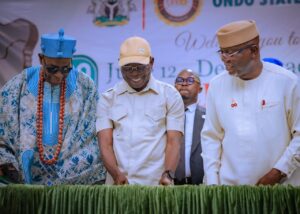
He recalled that the annulment of Abiola’s victory sparked widespread resistance and led to the emergence of the National Democratic Coalition (NADECO), which played a central role in the fight against military rule.
Falae warned that Nigeria must never return to military dictatorship, noting that many activists paid dearly through detention, exile and even death in the struggle to restore democratic governance.
The event attracted prominent political leaders, traditional rulers, members of the Ondo State Executive Council, lawmakers, local government chairmen, labour leaders, religious leaders and heads of security agencies from across the state.