
By Our Reporter
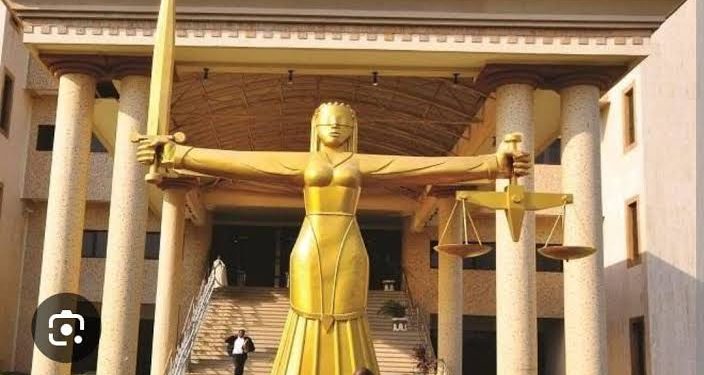
Proceedings in the trial of six individuals accused of plotting a coup took a controversial turn on Monday after journalists were denied access to the courtroom at the Federal High Court in Abuja.
The directive was issued by Justice Joyce Abdulmalik, who is presiding over the high-profile case.
Journalists who had arrived early and taken seats inside Court 6 ahead of the scheduled sitting were, however, asked to vacate the courtroom shortly before proceedings commenced.
Court officials, citing the judge’s instruction, directed the reporters to leave despite objections that the matter was of significant public interest.
Security personnel subsequently enforced the order, escorting journalists out of the courtroom, after which the doors were shut as the trial began.
Observers noted heightened security presence within and around the court premises, underscoring the sensitive nature of the proceedings.
The Attorney-General of the Federation and Minister of Justice, Lateef Fagbemi, later arrived at the venue and proceeded into the courtroom, where he is leading the prosecution on behalf of the Federal Government.
The defendants—identified as Mohammed Ibrahim Gana, Erasmus Ochegobia Victor, Ahmed Ibrahim, Zekeri Umoru, Bukar Kashim Goni, and Abdulkadir Sani—are facing a 13-count charge bordering on alleged treason, terrorism-related offences, and financial crimes linked to terrorism financing.
The accused persons were earlier arraigned before the court, which, in April, ordered their remand in the custody of the Department of State Services (DSS) and directed that the trial be fast-tracked.
Justice Abdulmalik had also granted their lawyers and family members access to them within a reasonable timeframe.
Monday’s exclusion of journalists is not the first restriction recorded in the judge’s courtroom.
In a previous matter involving internal disputes within the Peoples Democratic Party (PDP), a journalist was reportedly asked to leave for not having a seat.
The development has raised fresh concerns among legal observers and civil society groups over transparency in high-profile trials, with many stressing that open court proceedings remain a cornerstone of public confidence in the justice system.