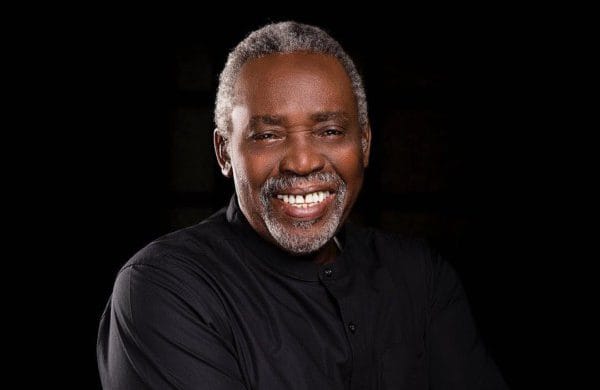

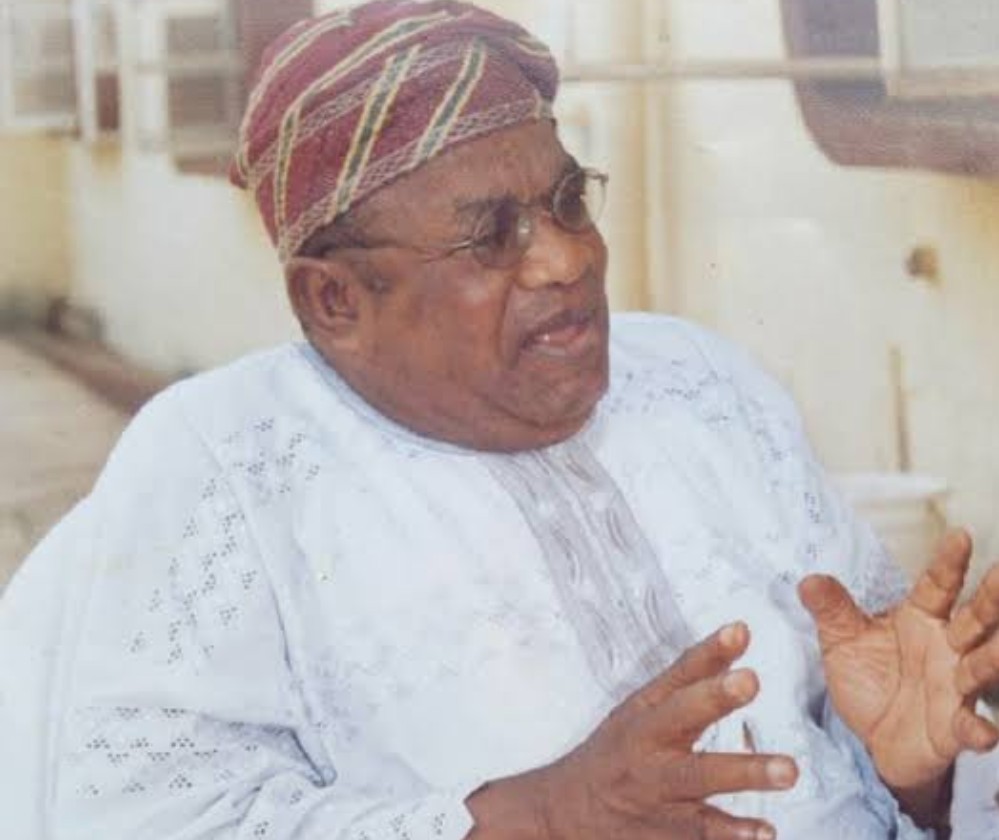
Chief Segun Adegoke is a respected legal luminary and elder statesman based in Ondo City, Ondo State. A veteran of Nigeria’s political evolution, he served as Publicity Secretary of the Unity Party of Nigeria (UPN) in Ondo State and later held the same position in Afenifere. He was Commissioner for Home Affairs and Information under the administration of the late Michael Adekunle Ajasin, where he also functioned as spokesman for both government and party, and briefly served as Commissioner for Lands and Housing during the political crisis involving Chief Akin Omoboriowo. A frontline advocate for democratic principles during that turbulent period, he later served under the Peoples Democratic Party (PDP) administration of Dr Olusegun Agagu until 2009. In this wide-ranging exclusive interview with David Akinadewo-Adekahunsi, MD/Editor-in-Chief, Nigerian Monitor Magazine, he speaks on governance, President Bola Tinubu’s political strategy, the weakening of opposition parties, and the state of Ondo.
You were one of the youngest commissioners in Ondo State during the second republic. Can you relive your experience and compare governance then with what we have now?
There is a big difference. When we assumed office in 1979, we were coming after years of military rule. We had disciplined and principled leaders—people like Chief Michael Adekunle Ajasin, Obafemi Awolowo and Nnamdi Azikiwe—men driven by ideology.
There was a clear distinction between the Unity Party of Nigeria (UPN) and the National Party of Nigeria (NPN). UPN stood for welfarism and progressivism, while NPN leaned towards conservatism. Governance was people-oriented. We focused on free education, healthcare, roads and social welfare. The aim was to improve the lives of the people.
Why has that changed today?
The quality of leadership has declined. There is little concern for the people. Today, leaders are more interested in wealth and comfort. Poverty has even been weaponised—people are kept dependent so they can be controlled.
Some argue that the present administration inherited these problems.
That is not a valid excuse. President Bola Ahmed Tinubu knew what he was going to meet. He is not new in politics. He presented himself for the job and said he was prepared. So he cannot now say he inherited problems.
Where do you think his administration got it wrong?
The major mistake was the removal of fuel subsidy without proper planning. You don’t take such a decision without consulting experts and putting measures in place to cushion the effects.
That action worsened inflation and hardship. People are suffering. Another area is security. There is not enough attention to it. Yet, the focus is already shifting to 2027 politics instead of governance.
How would you describe the current situation in Nigeria?
Nigeria is sitting on a keg of gunpowder. People are hungry, frustrated and insecure. If care is not taken, the situation can explode.
On a scale of 1 to 100, how would you rate the administration?
Very poor. The level of hardship is unprecedented. People struggle daily for food, school fees and medical care.
Let’s come to Ondo State. What is your assessment of Governor Lucky Aiyedatiwa?
I share the concerns of many stakeholders. There is no meaningful impact. No visible development in infrastructure, education or the economy.
He is what I would call a decorative governor—just occupying the office without translating it into results. The state is stagnant. There is no vibrancy, no major projects, no economic direction.
What is responsible for that?
Lack of experience. Politics is a game of experience. You must grow through the system. You cannot bring in someone without that background and expect performance.
In our time, you had to prove yourself. Even I had to demonstrate exceptional ability despite my age before I was appointed commissioner.
How would you rate his performance?
Frankly, I think he is one of the worst governors in Nigeria. The people are not feeling governance at all.
Your party, the PDP, has been facing internal crises. Are these new developments?
No, they are not new. Internal conflicts have always existed in Nigerian politics—from the days of the Action Group to the NCNC. Even within parties, there were disagreements, but they did not destroy the parties.
People still respected party structures and discipline. The parties remained intact despite those conflicts.
So what has changed now?
What has changed is how those conflicts are being exploited. Tinubu is the first real politician to become president in Nigeria. He understands the system deeply and knows how to use these internal crises to his advantage.
How exactly has he done that?
He has demystified opposition parties, especially the PDP. He studies their weaknesses and exploits them. He uses one faction against another—A against B, B against C—until the structure becomes weak.
Today, you see something strange: people who belong to a party openly working against it. For example, you have figures like the Minister of the Federal Capital Territory, Nyesom Wike, who still claims membership of the PDP but acts in ways that undermine the party’s cohesion.
Such a situation was not common before. It shows a deeper level of political manipulation and control.
Are you suggesting external interference in party affairs?
Yes. Political actors are being influenced, enticed and sometimes pressured. Some are promised protection or political advantage. This weakens party structures and creates confusion within the opposition.
What are the implications of this trend?
It is dangerous for democracy. A strong opposition is necessary for balance. If opposition parties are weakened or rendered ineffective, the system becomes unhealthy. There will be consequences if this continues.
Finally, what advice do you have for Nigerians?
Nigerians must remain vigilant. Institutions must function independently—the judiciary, the military, the police. We must rebuild our democratic structures and ensure accountability.
If we fail to do that, governance will continue to deteriorate and the people will suffer the consequences.