

FEATURE ARTICLE
By David Akinadewo-Adekahunsi
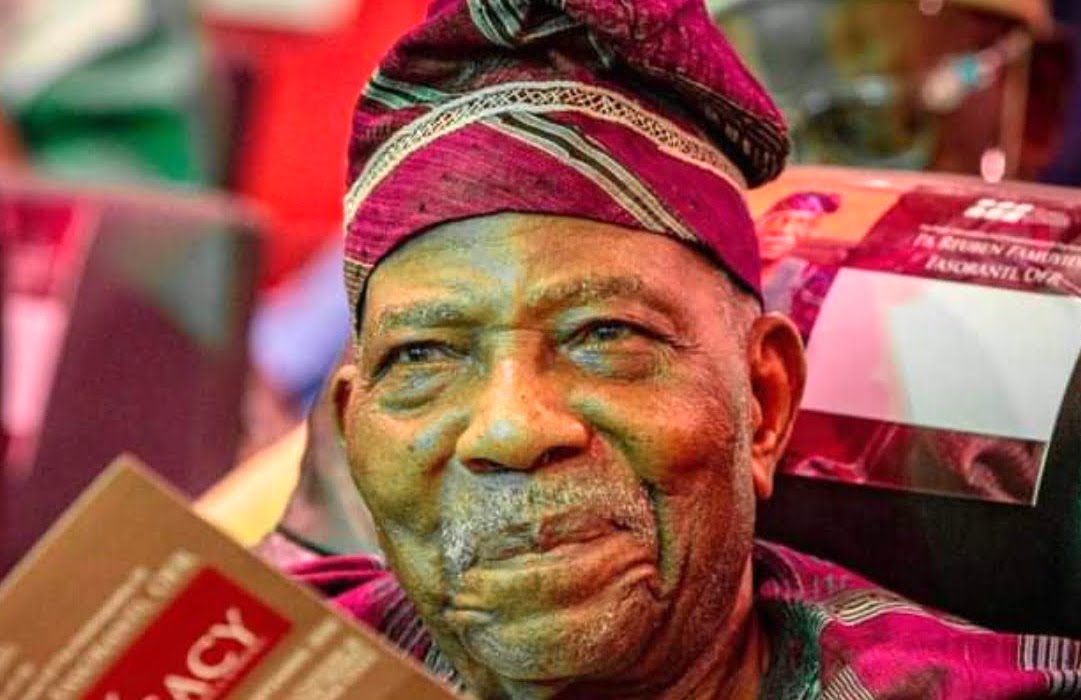
The recent burial of the late Awujale of Ijebuland, His Royal Majesty Oba Sikiru Kayode Adetona, CFR, has ignited a wave of controversy across the Yoruba nation and beyond. While the nonagenarian monarch, who reigned for over six decades, deservedly received accolades for his progressive reign and contributions to national development, the handling of his final rites has stirred disquiet, particularly among traditional worshippers and cultural custodians.
At the heart of the contention lies the perceived sidelining of Yoruba customs and rites that have, for centuries, defined the burial of monarchs. The traditional institutions that once prepared an Oba for the throne, nurtured his reign, and spiritually fortified his rule were reportedly excluded from the final journey. The traditional worshippers, key players in the spiritual farewell of a Yoruba king, were denied access to the burial programme. This development has raised fundamental questions about cultural erosion and the creeping dominance of modern state and religious institutions over age-old traditions.
Tradition on Trial
The Yoruba monarchical institution is deeply rooted in spiritual and ancestral mandates. From installation to final transition, kings are not merely rulers—they are seen as divine representatives, intermediaries between the living and the spirit world. Hence, the burial of a Yoruba monarch is not just a civic affair but a sacred process steeped in symbolism, rituals, and ancestral connections.
Yet, in a manner that many have described as a distortion of heritage, Oba Adetona’s burial followed a pattern that seemingly leaned more on modern state protocols and less on indigenous rites. The traditional custodians were conspicuously absent from the burial ground, their roles brushed aside, reportedly in favour of officialdom and religious orthodoxy.
This disconnection has triggered profound concern within cultural circles. For many, it is not just the burial of a king that is at stake, but the slow, calculated burial of Yoruba identity itself.
Lessons from the West and the East
Ironically, the same western civilisation often blamed for the abandonment of African traditions still holds tightly to its own customs. When Queen Elizabeth II of England passed on in 2022, the entire process—spanning several days—was guided by centuries-old royal protocols. While the public observed elaborate ceremonies, the actual burial was done in private, in strict adherence to British royal traditions, inaccessible to the general populace.
Similarly, in the Vatican, when a Pope dies, an intricate, centuries-old tradition unfolds—entirely orchestrated by the College of Cardinals in line with the customs established since the early days of the Catholic Church. The election of a new Pope is not just a spiritual process but also a symbolic reinforcement of heritage.
In Islamic societies across the Arab world, cultural rites surrounding leadership transitions are preserved with reverence, even as modern states continue to evolve. These societies, ironically, are among those that introduced religions—Christianity and Islam—to Nigeria, yet they have not abandoned their traditions.
The African Dilemma
Against this backdrop, one wonders: why must African societies, particularly the Yoruba, jettison their own traditions in the name of modernity? Why must kings, whose very ascension comes through the divination of Ifa and the rituals of traditionalists, be denied the same tradition in death?
This contradiction strikes at the core of cultural integrity. The position of an Oba is not merely political or ceremonial—it is spiritual. It is therefore contradictory, even sacrilegious, for anyone seeking the throne to embrace tradition in ascension and then reject it in transition.
The Role of the State and the Need for Reform
State governments have also come under scrutiny. Increasingly, they are being accused of meddling in the traditional processes of Obaship selection and burial. While the argument for maintaining law and order in contemporary society is valid, such interference must not extend into the spiritual domains of Yoruba heritage.
The selection of an Oba, by Yoruba custom, is the sacred responsibility of kingmakers, guided by the Ifa Oracle. Any deviation from this process undermines the legitimacy of the throne and, by extension, the spiritual and cultural stability of the land.
It is also essential to recognise that the traditional worshippers, herbalists, and spiritualists who prepare a king for the throne must not be denied the role of preparing him for the afterlife. Their rituals are not mere theatrics—they are deeply spiritual obligations passed down from time immemorial.
A Call for Cultural Reawakening
What played out at the burial of the late Awujale must serve as a wake-up call. If African societies continue to abandon their traditions while the progenitors of imported religions safeguard theirs, then the continent risks cultural extinction.
It is high time a clear framework is established—one that allows for a respectful fusion of tradition and modernity, without erasing the soul of the culture. Those aspiring to be kings must understand that tradition is not optional; it is the foundation of their authority. Likewise, the state must respect traditional institutions and their processes, especially during sensitive moments like the burial of a monarch.
Oba Sikiru Adetona was a revered king, a reformer, and a bridge between old and new. But the controversy surrounding his burial must not be swept under the carpet. It must spark a broader conversation on cultural preservation in an age where Africa often feels compelled to mimic, rather than protect.
Only then can the Yoruba nation—and Africa at large—truly honour its kings, not just in life, but in the dignity of their final journey.
David Akinadewo-Adekahunsi is the Editor-in-Chief, Nigerian Monitor