
…Rates Ondo governance poorly
By David Akinadewo-Adekahunsi
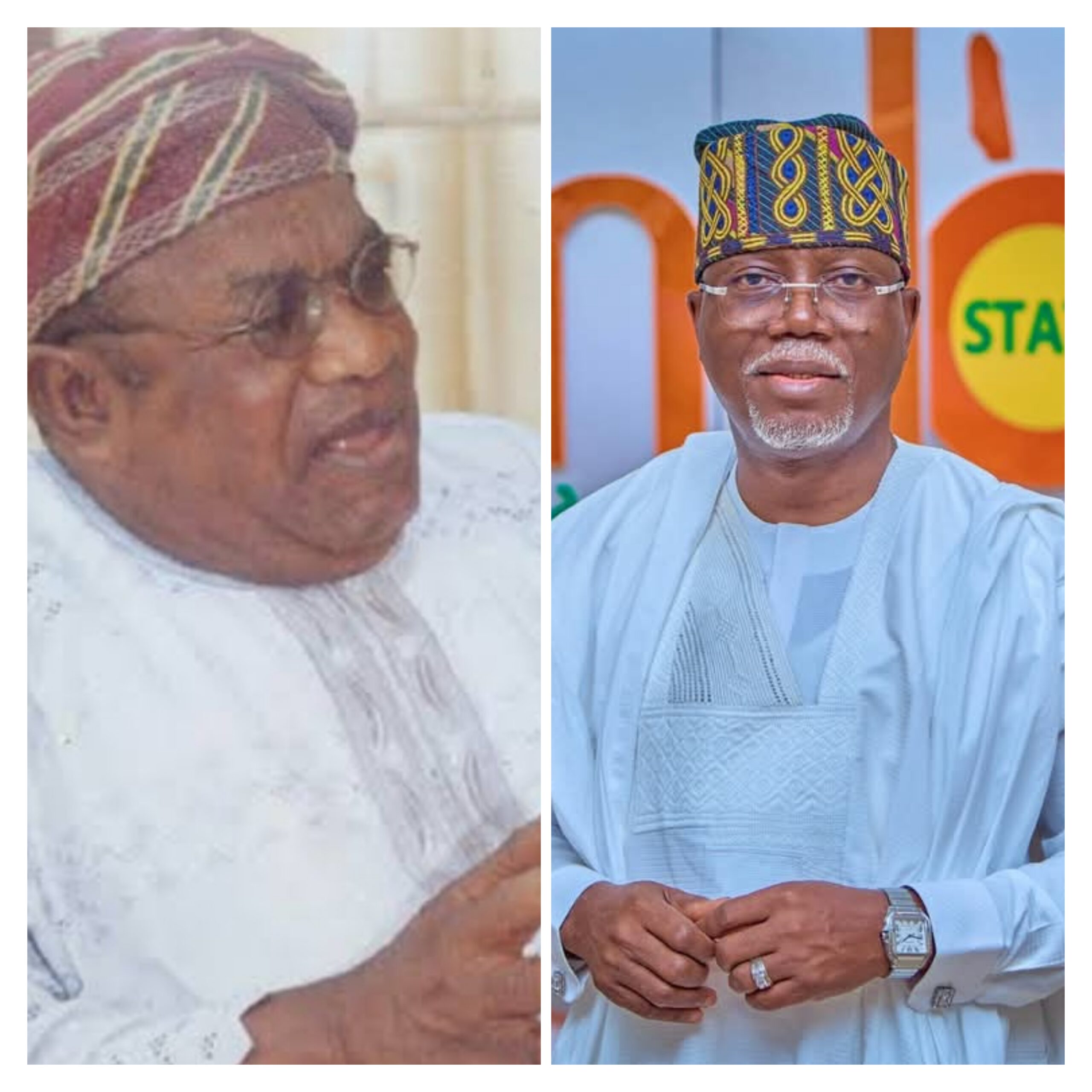
A former commissioner in Ondo State and veteran politician, Chief Segun Adegoke, has delivered a scathing assessment of governance in the state, describing Governor Lucky Aiyedatiwa as politically inexperienced and largely ineffective, with little visible impact across key sectors.
Adegoke, an 85-year-old political actor with decades of involvement in the state’s governance and Nigeria’s democratic evolution, is widely regarded as an authority on Ondo politics.
He began his career as Publicity Secretary of the Unity Party of Nigeria (UPN) in the state and later served in the same capacity for Afenifere upon its re-emergence.
His deep roots in progressive politics were further cemented when he was appointed Commissioner for Home Affairs and Information under the administration of the late Michael Adekunle Ajasin, where he also functioned as spokesman for both the government and the party.
He subsequently served, for a brief period, as Commissioner for Lands and Housing, during the turbulent political crisis between Ajasin and his deputy, Akin Omoboriowo.
The period, widely remembered as one of the most defining moments in the state’s political history, saw Adegoke emerge as one of the frontline figures who insisted that democratic principles must prevail and that the will of the electorate must not be subverted.
He later extended his service into the Fourth Republic, working with the Peoples Democratic Party (PDP) administration of Olusegun Agagu until it left office in 2009.
It is against this backdrop of experience that Adegoke assessed the current administration in an exclusive interview with Nigerian Monitor, arguing that the challenges facing Ondo State stem largely from what he described as a lack of political exposure and leadership preparation.
According to legal luminary, governance in the state has suffered from weak direction, with minimal progress recorded in infrastructure, education and economic development.
“He is just there decorating the chair and bearing the name governor. We have not felt his impact. Look at the schools, the roads and other sectors, nothing significant is happening,” Adegoke said.
The elder statesman traced the perceived shortcomings of the administration to what he termed a flawed political recruitment process, questioning how individuals without sufficient grounding in grassroots politics are elevated to executive leadership.
“Politics is a game of experience. You don’t just bring in someone who has not been tested at different levels and expect outstanding performance,” he said, stressing that leadership, in his era, was built through progressive exposure and proven competence.
Drawing from his own trajectory in public service, Adegoke recalled that even as a young commissioner, he had to demonstrate exceptional ability before being entrusted with office, noting that age and experience were critical considerations in leadership selection at the time.
He argued that the erosion of such standards has contributed significantly to declining governance outcomes.
He aligned himself with what he described as growing public dissatisfaction in the state, attributing it to the absence of visible development projects, job creation and economic stimulation.
According to him, the state currently lacks the vibrancy associated with purposeful governance.
“There is no visible development. No new initiatives. No meaningful change in the lives of the people,” he said.
In one of his strongest remarks, Adegoke offered a blunt personal verdict on the administration, saying, “I think he is one of the worst governors in Nigeria,” while linking the situation to broader systemic failures in leadership selection and political accountability.
He further criticised what he described as a posture of complacency in governance, suggesting that the administration appears disconnected from the realities of citizens grappling with economic hardship and limited access to basic services.
Adegoke, who has remained a consistent voice on governance and democratic integrity over the decades, called for a return to a system that prioritises experience, accountability and genuine public service, warning that without such reforms, the cycle of underperformance in leadership may persist to the detriment of the people.
– Read full text of the interview on Wednesday