

By Christian Abolu
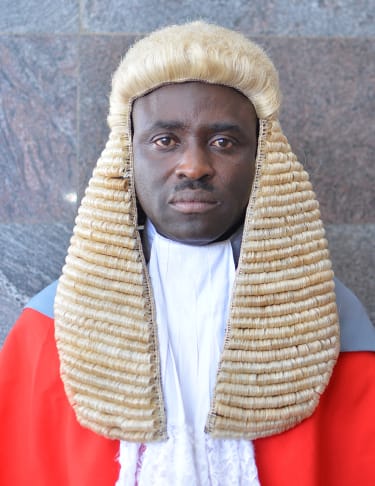
Retired Justice of the Court of Appeal, Oludotun Adefope-Okojie, has urged Nigerian courts to stop awarding elective offices to candidates without a demonstrable mandate from voters, insisting that fresh elections should be ordered where the lawful winner cannot be reliably established.
She said judges must make the consequences of their decisions for the electorate a mandatory consideration when granting electoral remedies, warning that judicial intervention loses legitimacy when it replaces, rather than protects, the people’s choice.
Adefope-Okojie stated this while delivering the Gavel International Annual Lecture 2026, titled, “Electoral Process in Nigeria: Managing the Boundaries of Judicial Intervention”, at the organisation’s annual conference and awards in Ikeja, Lagos, on Tuesday, November 17.
“It is not the duty of the Courts to award seats,” she declared.
“Where a defect in a candidacy or process is proved but the voters’ choice cannot be reliably reconstructed, Courts should prefer a fresh election or re-run over a declaration in favour of a candidate the voters did not choose.”
She challenged the judiciary to give greater attention to the substance of election complaints, resist politically convenient interpretations of procedural rules and deliver judgments that the public could understand.
According to her, a sound election judgment should be measured not only by its formal application of the law but also by whether it preserves the mandate expressed through lawful votes.
“The test of a good election judgment is not only whether it applies the law correctly, but whether, at the end of it, the person who holds office is the person the lawful votes chose, or, if that cannot be known, whether the choice has been returned to the voters,” she said.
The retired justice, however, distinguished between restoring a proven winner and substituting judicial preference for an uncertain electoral outcome.
“Declare a winner only where the lawful votes clearly show who won,” she said, adding that where the evidence could not establish the outcome, a fresh election would better uphold popular sovereignty than a judicial declaration.
Adefope-Okojie identified two recurring dangers in Nigeria’s electoral jurisprudence: courts displacing voters through their choice of remedies and courts declining to examine credible complaints because of procedural and evidential barriers that petitioners could hardly overcome.
She described the first as “substitutive” justice and the second as “abdicative” justice.
She said courts acted appropriately when they restored candidates favoured by lawful votes after manipulation had been established or invalidated a compromised process and returned the decision to the electorate.
However, she warned that the judiciary undermined the franchise when it conferred offices without an established electoral mandate or allowed a corrupted declaration to stand behind excessive technical and evidential requirements.
“A healthy jurisprudence avoids both these latter ones: it does not substitute, and it does not abdicate,” she said.
She stressed that her position was not a call for the judiciary to withdraw from election disputes, noting that judicial intervention remained indispensable to constitutional government, enforcement of electoral laws and protection of political rights.
“The question for the Bench is therefore not whether courts should intervene. The Constitution commands them to. The question is how to intervene in a way that strengthens, rather than displaces the sovereign choice of the electorate,” she said.
A major concern in the lecture was what she described as the marginalisation of voters in election disputes, which are conducted principally between candidates and political parties.
She observed that the legal framework for election petitions restricted the right to institute such proceedings to candidates and political parties, leaving voters without the standing to bring petitions.
“The boundaries of intervention must take seriously that the absent party in every election case is the electorate,” she said.
To illustrate the consequences of judicial remedies, Adefope-Okojie examined the Zamfara, Bayelsa and Plateau election disputes.
On Zamfara, she recalled that the Supreme Court, in APC v Marafa, treated votes cast for the All Progressives Congress as wasted after finding that the party had not conducted valid primaries. Candidates with the next highest votes and the required spread were consequently declared elected.
She questioned the democratic implications of a remedy that displaced the overwhelming electoral support recorded for a party because of failures in its nomination process.
In the Bayelsa dispute, PDP v Degi-Eremienyo, she noted that the disqualification of the APC deputy governorship candidate over the submission of false information brought down the joint ticket a day before inauguration.
While acknowledging the legal principle that a joint ticket stood or fell together, she argued that the remedy deserved closer examination because it transferred the office to the runner-up instead of returning the matter to the electorate.
She also cited the Plateau disputes following the 2023 general elections as an example of how appellate finality could preserve what she considered an erroneous judicial intervention.
According to her, the Court of Appeal removed the PDP governor and several legislators over questions concerning the party’s structures, while the Supreme Court subsequently restored the governor on the ground that sponsorship was a pre-election matter.
The affected legislators, she said, could not pursue their election appeals beyond the Court of Appeal.
“This remains the starkest illustration of how finality rules can lock in an erroneous intervention,” she said.
Turning to the handling of evidence in election petitions, the retired justice criticised what she described as excessively difficult requirements for proving electoral malpractice.
She questioned the insistence on polling-unit-by-polling-unit testimony and the treatment of certified electoral documents where their makers or relevant officials were not called to testify.
She said petitioners could be confronted with the practical burden of assembling thousands of documents and witnesses within tightly restricted hearing periods.
Adefope-Okojie maintained that the special character of election petitions should not justify interpretations that departed from statutory provisions governing the proof of facts.
“The fact that election petitions are said to be sui generis, in my very humble opinion, does not justify the abandonment of the express stipulations in the Evidence Act or Electoral Act guiding proof of facts,” she said.
She argued that the absence of a document’s maker or an electoral official should not automatically lead to the rejection of otherwise admissible evidence, insisting that such deficiencies should instead be considered in determining the weight to be attached to the material.
“My wonder is what is so special about election disputes, that takes them out of the remit of the Evidence Act over and above other even more important disputes?” she asked.
Citing the Edo governorship dispute involving Asue Ighodalo and Monday Okpebholo, she criticised the difficulties petitioners faced when documentary allegations were rejected or discounted because polling agents and electoral officials were not called as witnesses.
While acknowledging the need for strict rules in a time-limited jurisdiction, she warned that procedural requirements could lose public acceptance when they appeared to prevent the examination of the merits of a petition.
“The boundary is crossed in either direction by courts that overlook defects to reach a preferred outcome, and by courts that use defects to avoid a case that deserves an answer,” she said.
She called for an amendment to create exceptions to the requirement that witness statements on oath must accompany election petitions, particularly for subpoenaed witnesses, including officials of the Independent National Electoral Commission (INEC).
Adefope-Okojie questioned the practicality of expecting an official of an institution defending an election to voluntarily provide an advance deposition in support of a challenge to the same election.
Where relevant facts had been pleaded and an official witness was compelled to produce supporting documents, she argued that the evidence should be considered without insisting on a frontloaded statement.
She said the existing approach had contributed to the dismissal of petitions she considered seemingly meritorious.
On electoral technology, she urged courts to make effective use of electronic records and ensure that unexplained discrepancies did not become another obstacle to accountability.
She proposed that discrepancies between results uploaded to INEC’s Result Viewing Portal and collated figures could place an evidential burden on INEC or the respondent to explain the differences.
She added that claims of “communication failure” should be supported by evidence rather than accepted as an untested defence against scrutiny.
The retired justice also called for closer scrutiny of judges selected to adjudicate election disputes, urging the Chief Justice of Nigeria, the President of the Court of Appeal and heads of courts to ensure that tribunal members possessed the necessary competence, integrity and political neutrality.
She said judges must avoid associations that could suggest political alignment and deliver full, transparent and well-reasoned judgments.
“Legitimacy is the only power the courts have,” she said, warning that the public could recognise judgments that did not accord with the justice of a dispute.
Her criticism also extended to political parties, which she accused of generating litigation through flawed congresses, disregard for their constitutions and unlawful substitution of successful aspirants with favoured candidates.
She rejected a blanket judicial retreat from intra-party disputes, arguing that courts should intervene in deserving cases rather than allow the doctrine of non-interference in the internal affairs of political parties to become a cover for illegality.
To underscore the scale of the problem, Adefope-Okojie cited 1,209 petitions arising from the 2023 general elections against 1,280 contested offices, representing approximately 94.5 petitions for every 100 offices.
She acknowledged that multiple petitions could challenge the same seat, meaning the ratio should not be interpreted as the percentage of distinct offices under litigation.
The figures cited in her lecture also showed that Nigeria’s litigation rate was considerably higher than the approximately 6.5 petitions per 100 elective seats recorded in Kenya in 2022 and 5.8 per 100 parliamentary seats in Ghana in 2020.
She said only 103 of Nigeria’s 1,209 petitions succeeded, while the others were withdrawn, struck out, dismissed or refused.
“These figures do not measure the quality of justice. They measure trust, and on that measure the Nigerian electoral process is in severe deficit,” she said.
Adefope-Okojie argued that reducing election-related litigation would require reforms beyond the judiciary, including credible party primaries, impartial election administration and effective mechanisms for resolving grievances before they reach election tribunals.
Drawing lessons from Kenya and Malawi, she said courts could act firmly against fundamentally compromised elections while still returning the final decision to voters through fresh polls.
She also called for restraint against changing electoral rules during election periods and urged the development of procedures that distinguish harmless administrative lapses from defects that undermine electoral integrity.
She said the ultimate objective should be an electoral system in which litigation became less necessary because the ballot reliably determined who governed.
“The Constitution places sovereignty in the people and makes the Courts the guardians of that sovereignty, not its holders.”
“A judgment that corrects a stolen mandate honours it. A judgment that confers a mandate the voters never gave, however lawful in form, diminishes it,” she said.