
• Aiyedatiwa deploys 120 waste skips, two compactor trucks, inaugurates 65 school environmental clubs
By Duchess Ifeoluwa
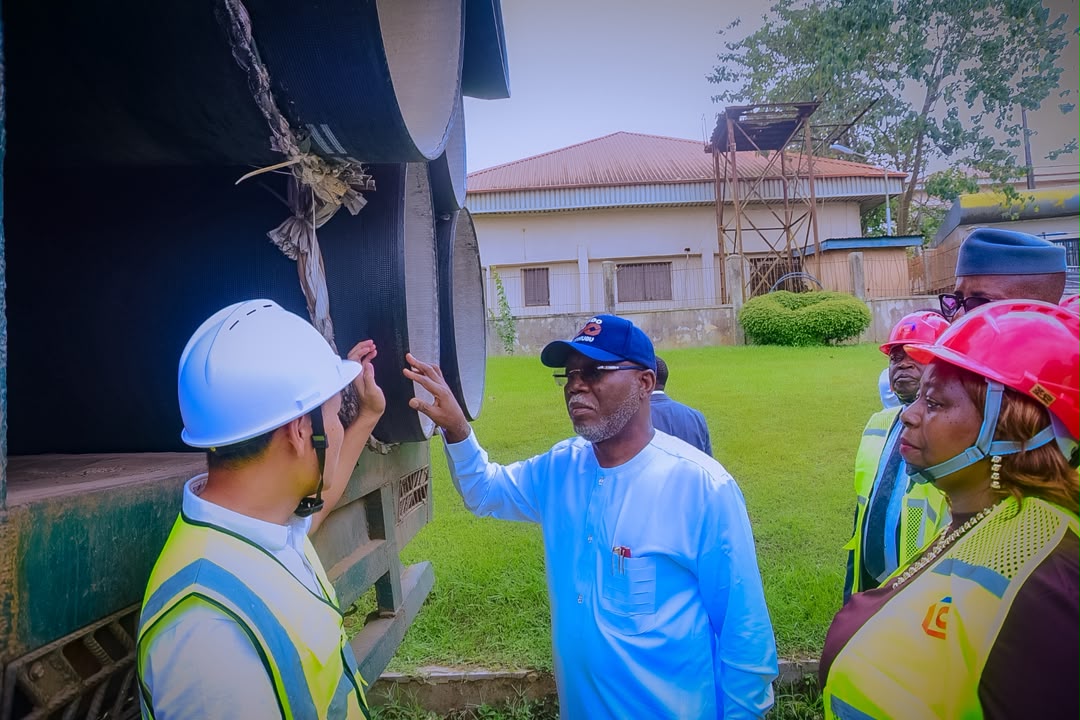
Ondo State Government has restored the State Environmental Task Force after an 18-month hiatus, increased the number of private waste management operators from 19 to 51 and deployed 120 waste skips and two modern compactor trucks as part of efforts to improve environmental sanitation across the state.
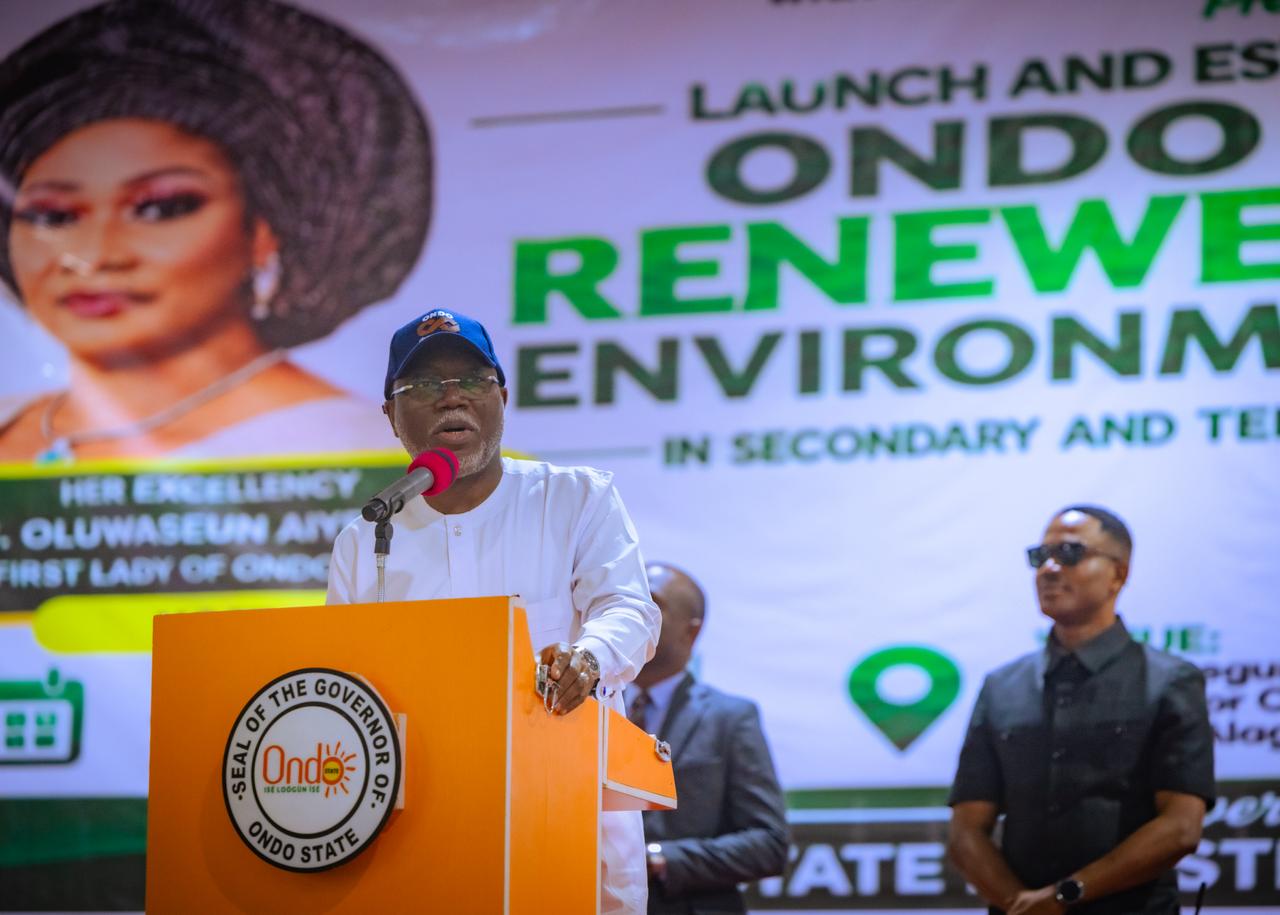
Governor Lucky Aiyedatiwa announced the measures on Wednesday at the Dr Olusegun Mimiko International Centre for Culture and Events, popularly known as The Dome, Akure, during the inauguration of 65 Renewed Hope Environment Clubs in selected secondary schools and tertiary institutions.
The initiatives, according to the governor, form part of a broader environmental reform programme aimed at strengthening sanitation, protecting natural resources and preparing young people to address emerging ecological challenges.
Other measures unveiled include the commencement of the formulation of the Ondo State Climate Change and Circular Economy Policy, revival of monthly environmental sanitation and a comprehensive review of the state’s environmental laws.
The 65 environmental clubs are being established under the Renewed Hope Initiative of the First Lady, Senator Oluremi Tinubu.
Speaking at the event, Aiyedatiwa described environmental sustainability as fundamental to the state’s development, warning that the degradation of natural resources and indiscriminate waste disposal posed serious threats to public health, agriculture, livelihoods and future generations.
“Our forests, rivers, wetlands, farmlands, coastlines and urban settlements are more than geographical features. They are the foundations of our livelihoods, the sources of our food and water, the custodians of our biodiversity and the natural assets upon which our development depends,” he said.
The governor said his administration had strengthened collaboration with the National Environmental Standards and Regulations Enforcement Agency (NESREA), the United Nations Industrial Development Organisation (UNIDO) and the Food and Beverages Recycling Alliance (FBRA) to improve environmental monitoring and technical capacity.
He cited the government’s response to the odour nuisance incident in Akure as an example of the need for timely, evidence-based and coordinated action in addressing environmental challenges.
Aiyedatiwa explained that the newly established school clubs would engage students in tree planting, waste sorting, recycling, sanitation, water conservation and peer education, with activities integrated into school programmes and extended to surrounding communities.
Situating the reforms within his administration’s OUR EASE Development Agenda, the governor said economic growth must not be pursued at the expense of environmental protection.
“We cannot develop our cities while allowing indiscriminate waste disposal to undermine public health. We cannot achieve success in our agricultural policies and programmes while permitting continued degradation of our soils and water resources. We cannot attract investment without ensuring responsible environmental management,” he said.
He described environmental protection as an economic opportunity, noting that waste recovery, sustainable agriculture, renewable energy and environmental services could create employment, entrepreneurship and innovation.
The governor urged students to become environmental ambassadors and called on teachers, parents, traditional rulers and community leaders to promote responsible environmental practices.
He also appealed to development partners and the private sector to provide technical support and collaborate with the state.
He commended President Bola Tinubu, the First Lady and the Minister of Environment for their support before formally inaugurating the clubs.
In her address, the wife of the governor, Mrs Esther Aiyedatiwa, urged students to take responsibility for protecting the state’s natural resources, describing the initiative as an investment in sustainable communities and the future of young people.
She identified flooding, coastal erosion, deforestation, plastic pollution, indiscriminate waste disposal and water contamination, worsened by climate change, as major threats to livelihoods, public health and biodiversity.
According to her, the clubs would promote biodiversity conservation, tree planting, proper waste management, water conservation and the protection of natural resources.
Mrs Aiyedatiwa cautioned against reducing the clubs to mere school associations, insisting that they must serve as active platforms for learning, innovation and community engagement.
She commended Senator Oluremi Tinubu for championing the Renewed Hope Initiative and Governor Aiyedatiwa for extending governance beyond infrastructure development to environmental protection and public health.
Also speaking, the Minister of Environment, Balarabe Abbas Lawal, represented by the Assistant Director, Pollution Control and Environmental Health Department, Federal Ministry of Environment, Mr Dangiwa Ewa Oruwe, endorsed the initiative.
He said the programme aligned with the Renewed Hope Agenda and would equip students with practical knowledge of waste management, recycling, tree planting, biodiversity conservation, climate change mitigation and pollution prevention.
Identifying climate change, deforestation, flooding, land degradation and improper waste management as major environmental challenges, he urged the state Ministries of Environment and Education, school administrators and other stakeholders to ensure the sustainability of the clubs.
Earlier, the Commissioner for Environment, Dr Tob Loko, said the initiative, implemented in collaboration with the Office of the First Lady, was designed to take environmental education beyond textbooks and examinations to practical engagement in schools and communities.
He said the clubs would promote waste sorting, tree planting and protection, improved sanitation and campaigns against environmental pollution.
Loko described students as central to the programme, noting that environmentally responsible classrooms could influence entire schools, while responsible schools could transform their communities.
He pledged the ministry’s collaboration with the Office of the First Lady, local governments, educational institutions, parents and other stakeholders to achieve the programme’s objectives.
In his goodwill message, the Chairman of the Ondo State Oil Producing Areas Development Commission (OSOPADEC), Prince Biyi Poroye, pledged the commission’s support for the governor’s environmental agenda.
Recalling that the administration of Chief Obafemi Awolowo planted teak trees which successive generations harvested without replacing, Poroye called for renewed commitment to tree planting and environmental cleanliness.
The Chairman of the Ondo State Waste Management Board, Mrs Yinka Alabi, said environmental sanitation should be regarded as a personal responsibility rather than left solely to government.
She recalled that environmental education was previously part of school activities and urged residents to revive the culture of keeping their surroundings clean.
Alabi advised residents not to wait for government officials to direct them before maintaining clean environments, stressing that collective action was necessary to build healthier communities.
Also speaking, an environmental activist, Miss Motunrayo Oyedele, called for greater adoption of environmentally friendly practices, highlighting afforestation, reforestation, energy conservation and regular sanitation under the Green City Initiative.
She urged residents to switch off electrical appliances when leaving their homes and make environmental cleanliness a daily habit rather than restrict sanitation activities to the last Saturday of every month.
Environmental and safety kits were distributed to participating schools to equip students with materials for promoting cleanliness, safety awareness and responsible waste management within their communities.
Those in attendance included the Deputy Governor, Dr Olayide Adelami; Chief of Staff, Prince Segun Omojuwa; Head of Service, Chief Segun Odusanya; members of the State Executive Council; State Coordinator of Renewed Hope Ambassadors, Rt Hon Victor Olabimtan; Director-General of OSRC Media Group, Mr Kenneth Odusola-Stevenson; and students from various schools across the state, among other government officials.