
By David Akinadewo-Adekahunsi
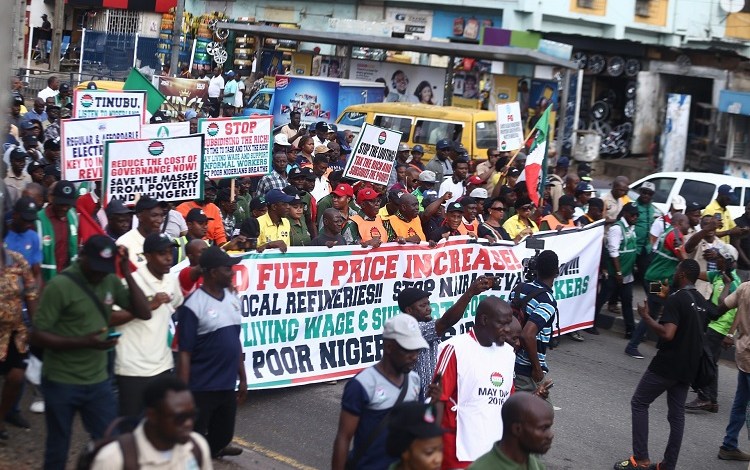
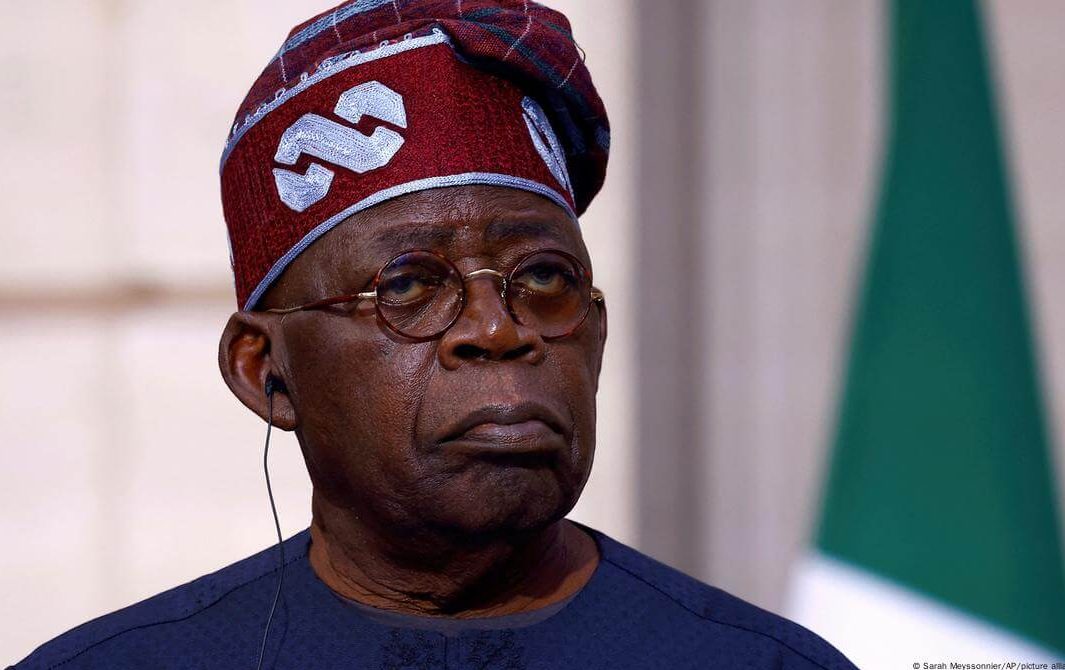
President Bola Ahmed Tinubu has rejected calls for the reversal of the fuel subsidy removal, warning that returning to the old subsidy regime would amount to abandoning the difficult economic reforms undertaken by his administration to correct Nigeria’s longstanding fiscal and structural problems.
Tinubu made his position known in his Independence Day address to Nigerians on Thursday, as he marked the 66th anniversary of the country’s independence and declared that Nigeria had reached a critical turning point in its economic journey.
The President argued that the debate over subsidy could not be separated from the broader question of how the country finances development, maintains infrastructure and creates opportunities for its citizens.
He said the economic reforms introduced by his administration had been difficult and had produced genuine hardships for Nigerians, but maintained that those measures were intended to confront weaknesses that had accumulated over decades rather than create them.
“Our reforms did not create the weaknesses in our economy. They confronted them,” Tinubu said.
He specifically warned against what he described as calls by “influential but regressive voices” for the government to abandon the reform programme and return to what he termed “the abuse of addictive subsidies”.
The President urged Nigerians to remember why the reforms were introduced and consider the progress he said had been recorded since the measures were implemented.
“Now, as certain influential but regressive voices would have us abandon the treatment and return ourselves to the abuse of addictive subsidies, we must resist their siren song. We must remember why we began this journey and how far we have already come,” he said.
Tinubu likened the economic situation inherited by his administration in 2023 to that of a patient diagnosed with cancer, saying the country had to choose between confronting the underlying disease or merely masking its symptoms.
He argued that successive governments had, for too long, opted for measures that eased immediate pressure without addressing the structural weaknesses beneath the economy.
“For too long, Nigeria’s leaders chose morphine while praying for a miracle that never came,” he said.
According to him, governments had concentrated on symptoms while allowing deeper economic distortions to persist, spending large sums on arrangements that were not sustainable and passing the consequences from one generation to another.
Tinubu said his administration therefore chose to undertake what he described as the necessary “treatment”, despite the discomfort associated with the process.
“When this Administration assumed office, we resolved to do things differently. We chose to excise the cancer. The reforms that followed were difficult. The side effects were real. Yet, we must never confuse the medicine with the disease,” he said.
The President’s defence of the subsidy policy came as he presented what he described as evidence that the Nigerian economy had begun to stabilise following the reforms.
He said the economy had grown by more than four per cent in 2026, with both the oil and non-oil sectors contributing to the renewed growth.
He also cited a decline in oil theft, a substantial fall in inflation from its peak, rebuilt foreign reserves and greater stability in the foreign exchange market as indications that the reforms were beginning to produce results.
Tinubu further said Nigeria recorded more than $6 billion in non-oil export revenue in 2025, describing the figure as evidence of increasing activity by Nigerian businesses outside the traditional dependence on crude oil.
The President maintained that these developments justified the government’s decision to remain on the reform path rather than reverse course.
He said Nigeria had now moved from the phase of emergency economic correction to a new phase focused on converting improved economic fundamentals into widespread prosperity.
“For three years, our overriding purpose was to correct our nation’s course. Now, our purpose is simple: shared and widespread prosperity,” he said.
Tinubu acknowledged, however, that millions of Nigerians were still struggling with the effects of high living costs and that the government could not expect citizens to wait indefinitely for the benefits of economic reforms.
He said the administration’s next priority was therefore to reduce the cost of living by lowering the cost of producing and transporting goods.
The President linked this objective to increased agricultural productivity, improved infrastructure, cheaper energy for manufacturers and more efficient transportation.
He said the government was expanding mechanised irrigation and dry-season farming, improving access to seeds and fertiliser, investing in storage and transportation, and building roads, railways and ports to connect farms and factories with markets.
His argument was that reducing the cost of production and distribution would ultimately help lower the prices paid by consumers.
Tinubu also said the government would continue to provide support to vulnerable Nigerians while the economy transitions towards greater productivity and employment.
He cited the National Social Register, the Nigerian Education Loan Fund and the Consumer Credit Corporation as mechanisms through which government was providing support to low-income households, students and working Nigerians.
He stressed, however, that such interventions were intended as a bridge towards prosperity rather than a permanent substitute for economic opportunity.
“These programmes are not substitutes for prosperity. They are a bridge to aid our nation’s citizens on their path towards it,” he said.
“Our objective is not to manage poverty more efficiently. We will defeat it.”
The President argued that the country’s economic problems had accumulated over several decades and could not be eliminated within a single administration.
“We cannot erase in four years what accumulated over generations. But we can change its course,” he said.
He therefore appealed for patience and sustained commitment to the reform programme, saying the country now had stronger economic foundations from which to pursue long-term growth.
“For the first time in decades, we embark on this task from a position of strength; with an economy whose fundamental direction has been corrected,” Tinubu declared.
He described the transition from reform to prosperity as the next stage of his administration’s economic agenda, insisting that reversing the reforms at this point would undermine the foundation already laid.
“The age of reform has done its work. Now begins the age of prosperity,” he said.
Tinubu’s Independence Day message therefore placed the question of fuel subsidy within a wider argument about the direction of Nigeria’s economy, with the President maintaining that the country should not return to policies that, in his assessment, had delayed necessary economic adjustments.
He called on Nigerians to look forward rather than return to what he characterised as unsustainable economic arrangements, declaring: “Nigeria has corrected its course. We have passed through our own Red Sea. This is not the time to look back.”
The President said the ultimate test of the reforms would be whether they could deliver a Nigeria in which farmers earn better incomes, businesses become more productive, young people secure productive employment and families experience greater economic security.
He described that destination as a Nigeria of “abundance and opportunity”, where prosperity is broadly shared and the country’s vast economic potential is reflected in the lives of its citizens.
“Our destination is in sight. Our foundations are strong. Our direction is clear. So let us go forward. No looking back,” Tinubu said.