

By David Akinadewo-Adekahunsi
Ondo State Government has imposed a temporary ban on the production and sale of locally brewed alcoholic and alcoholic-herbal beverages in Odigbo Local Government Area, following the deaths of 29 persons last week.
The deaths were recorded from 60 suspected cases of sudden illness, while the police have arrested 15 suspects, including a suspected producer of substances believed to contain methanol, in connection with the incident.
The development has heightened efforts by the state government, security agencies and health authorities to unravel the circumstances surrounding the deaths recorded in Odigbo and neighbouring communities, particularly Odigbo Ward and Araromi-Obu.
The Commissioner for Health, Dr. Banji Awolowo Ajaka, who gave an update on the situation at the weekend, said the government’s investigation had established a strong epidemiological suspicion that the illnesses and deaths were associated with exposure to a probable toxic alcoholic substance.
He, however, stressed that the specific toxic agent responsible for the fatalities had not been confirmed by laboratory analysis, saying all the cases remained classified as suspected cases pending the outcome of toxicological investigations.
According to Ajaka, as of September 11, the state surveillance teams had identified 60 suspected cases through active case searches, retrospective investigations, health facilities and community reports.
He said 29 of the suspected cases had died, three persons were on admission, while 27 others were under observation, representing a provisional case-fatality ratio of approximately 48.3 per cent.
The Commissioner said about 95 per cent of those affected were males, aged between 16 and 55 years, with cases principally identified in New Town, Odole, Okele and Orita Odigbo in Odigbo Ward before a second cluster emerged in Araromi-Obu.
He said a further suspected case had also been reported in Oniparaga, which had consequently been placed under active surveillance.
Ajaka said the Ministry of Health became aware of the initial cluster following reports of sudden deaths in New Town on September 3, after which investigations revealed additional deaths in surrounding settlements.
He disclosed that a second cluster was subsequently identified in Araromi-Obu, where eight persons reportedly died following the consumption of an alcoholic substance at a naming ceremony.
The clinical features recorded among affected persons, he said, included headache, generalised body pains, weakness, visual disturbance, difficulty in breathing and altered consciousness, with some patients deteriorating rapidly before dying.
He said the pattern of illness and the reported history of exposure had raised a strong epidemiological suspicion of exposure to a toxic alcoholic substance.
“However, we are yet to have laboratory evidence of the cause of deaths. Therefore, all cases remain classified as suspected cases until the specific toxic agent responsible is identified,” he said.
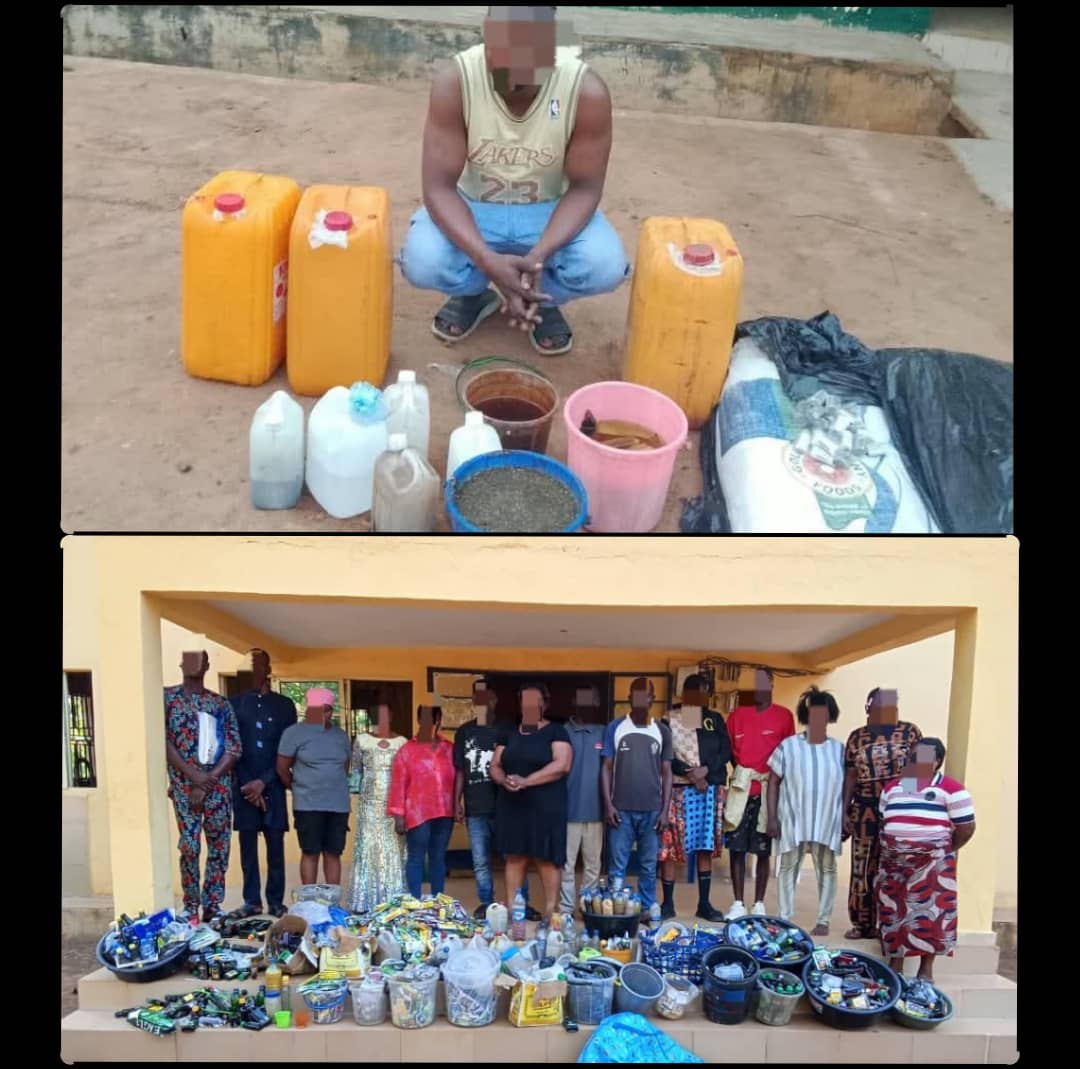
As investigations intensified, the Ondo State Police Command on Sunday announced the arrest of 15 suspects, including Oloruntoba Babatunde, popularly known as “Meko”, who is suspected to be involved in the production of substances suspected to contain methanol.
The Police Public Relations Officer, DSP Abayomi Jimoh, said Babatunde was assisting investigators, while substances suspected to be methanol had been recovered for forensic examination.
The Command said the analysis was aimed at establishing the exact composition of the recovered substances and determining whether they were linked to the reported deaths.
The arrests followed a directive by the Commissioner of Police, CP Felix Ohagwu, to officers of the State Criminal Investigation Department, Akure, to commence an extensive enforcement operation under relevant provisions of the Liquor Act across Ore and Odigbo.
The operation, which targeted the production, sale and consumption of dangerous alcoholic drinks and concoctions, led to the arrest of 14 other suspects comprising alleged sellers and consumers of the drinks at different locations.
The suspects were identified as Ayemobola Abayomi, Ebeyilo Oyekan, Fadeyi Folake, Febisola Solomon, Olamojiba Akinyosoye, Julius Ogeichi, Seyifunmi Aduke, Adesanmi Toyin, Oluwoye Amaka, Adeyayi Ojo, Adebayo Olaniyi, Raphael Emeka, Adenuga Oluwaseun and Adediwura Godwin.
The Police said the case had been transferred to the State CID, Akure, for discreet and comprehensive investigation, adding that a team of detectives visited Araromi-Obu on September 12 to gather further evidence.
Investigators, according to the Command, are examining every relevant lead, including the source, production, composition, distribution and consumption of the suspected substances and their possible connection with the deaths.
The command noted in the statement that suspects remain in custody and are expected to be charged to court upon the conclusion of investigations, in accordance with applicable laws.
The Police also disclosed that the bodies of the deceased were undergoing necessary medical and forensic procedures, with the results of post-mortem examinations expected to provide further evidence on the actual causes of the deaths.
Meanwhile, the state government has stepped up its laboratory and toxicological investigations, with 36 biological specimens, including blood and urine samples collected from affected persons, already submitted for analysis.
Samples of suspected alcoholic substances recovered from the affected communities have also been secured for toxicological examination.
The investigations are being conducted in collaboration with relevant regulatory authorities, including the National Agency for Food and Drug Administration and Control (NAFDAC), while other agencies and partners are supporting the emergency response.
Ajaka said the government had activated a coordinated emergency response involving the Ministry of Health, affected local government authorities, traditional institutions, security agencies and regulatory bodies.
He said the response included active and retrospective case finding, epidemiological investigations, line-listing, verbal autopsies of selected deceased persons, clinical management and referral of surviving patients, community sensitisation and risk communication, as well as the provision of essential health commodities to affected health facilities.
The government has also ordered the enforcement closure of suspected alcoholic outlets allegedly linked to the incident.
Health officials, meanwhile, have intensified medical intervention in the affected communities, with a significant number of youths taken to the Odigbo Local Government medical facility for medical assessment, testing and treatment.
In a major precautionary measure, the state government, working with the Odigbo Local Government authorities led by the council chairman, Mr. Taiwo Adegoroye, placed a temporary ban on the local production and sale of all locally brewed alcoholic and alcoholic-herbal beverages in the local government.
The government directed that anyone suspected of operating an outlet or openly selling such products should be reported to the nearest police station.
Residents have also been urged to facilitate the immediate transportation of anyone exhibiting symptoms such as headache, generalised body pains, weakness, visual disturbance, difficulty in breathing or altered consciousness to the General Hospital, Ore.
The Police have similarly directed sustained enforcement against the production, distribution and sale of unapproved, adulterated or otherwise dangerous alcoholic substances across Ondo State.
The Command advised members of the public to exercise extreme caution and refrain from consuming locally produced, unlabelled or suspicious alcoholic drinks and herbal concoctions, particularly products whose contents, source or safety could not be verified.
It also urged residents to report the production, sale or circulation of suspected harmful substances to the nearest police station or through the Command’s official communication channels.
The government warned residents against attempting to treat suspected cases at home, relying on traditional remedies or taking unverified medications, stressing that early presentation at a health facility would give medical personnel the best opportunity to provide appropriate supportive care and referral.
Ajaka also appealed to families and community leaders to report unusual illnesses and sudden deaths promptly to health authorities to enable surveillance teams to investigate them without delay.
The Commissioner assured the people of Odigbo that the government was fully engaged in containing the situation, saying health professionals and surveillance teams were on the ground, patients were receiving care and samples were being subjected to scientific examination.
Security and regulatory agencies, he added, were pursuing the source of the suspected substances, while the government’s partners were providing technical support.
The Commissioner of Police, CP Felix Ohagwu, equally reaffirmed the Command’s commitment to protecting lives and preventing the circulation and consumption of substances capable of endangering public health and safety.
He said anyone found culpable after the conclusion of investigations would be brought to justice.
Both the government and police have cautioned against speculation and the circulation of unverified claims on social media, particularly concerning the identities of victims, suspects or the alleged source of the outbreak.
While the evidence gathered so far has strengthened suspicion of toxic exposure associated with alcoholic substances, authorities have maintained that the precise toxic agent responsible for the deaths can only be conclusively established through laboratory, toxicological and post-mortem examinations.
The state government has therefore assured residents that it will leave no stone unturned in determining the cause of the deaths, identifying the substance involved, protecting those who may have been exposed and preventing further loss of life.
The government also promised to make the findings of the investigation public as soon as credible scientific evidence becomes available.