

By Duchess Ifeoluwa
Scholars have called for greater collaboration among researchers as a strategic pathway to producing world-class research, attracting competitive international funding and developing innovative solutions to pressing societal challenges.
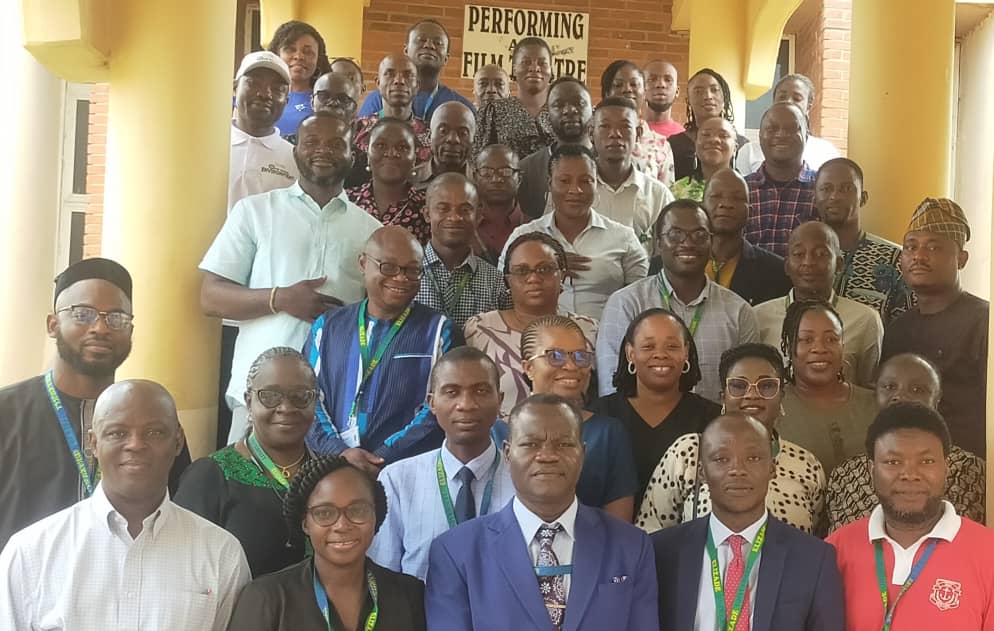
The call was made at a high-impact one-day research clinic organised by the Faculty of Basic and Applied Sciences of Elizade University, Ilara-Mokin, which brought together lecturers, researchers and postgraduate students to strengthen interdisciplinary partnerships, enhance research productivity and improve access to global research opportunities.
Held under the theme, “From Data to Paper,” and the slogan, “Work Together, Build Together,” the clinic featured collaboration matchmaking sessions, research methodology and data presentation clinics, innovation and start-up pitch presentations, funding opportunities workshops, laboratory skills enhancement sessions and structured mentoring designed to foster long-term research partnerships.
Declaring the programme open, the Vice-Chancellor of Elizade University, Professor Philip Oguntunde, challenged researchers to cultivate a culture of collaboration, describing teamwork as the foundation for impactful research and institutional advancement.

According to him, universities must first strengthen internal collaborations before seeking international research partnerships.
“Before looking outside for international partnerships and collaborations, we must first build strong collaborations among ourselves. Internal collaboration is not about competition; it is about synergy. When we work together, we achieve results faster, cheaper and more effectively,” he said.
Professor Oguntunde noted that many groundbreaking discoveries are products of interdisciplinary collaboration, stressing that pooling expertise across different fields enables researchers to unlock opportunities that may otherwise remain untapped.
He described such collaborations as opportunities to harvest “low-hanging fruits” capable of generating high-impact research with global relevance.
The Vice-Chancellor also encouraged scholars to adopt smarter strategies for publishing in reputable international journals without incurring excessive publication costs.
He warned against exploitative publication practices and advised researchers to leverage mentorship, collaboration and knowledge-sharing to improve both the quality and visibility of their scholarly outputs.
According to him, improved research productivity would not only strengthen individual academic profiles but also enhance the university’s global reputation and contribute significantly to national development.
Earlier, the Dean of the Faculty of Basic and Applied Sciences, Professor Omotola Dada, described the research clinic as a strategic initiative designed to equip scholars with practical skills needed to succeed in today’s highly competitive global research ecosystem.
She emphasized that multidisciplinary collaboration has become indispensable in addressing increasingly complex scientific and societal challenges.
“The world is increasingly looking for integrated solutions to complex problems, and multidisciplinary research provides that opportunity. Collaboration enables researchers to harness the strengths of different disciplines to produce more impactful outcomes,” she said.
Professor Dada added that beyond improving publication records and grant acquisition, the programme was intended to cultivate a sustainable culture of innovation, teamwork and academic excellence among researchers.
Speaking on the importance of collaborative research, the Head of the Department of Biological Sciences, Dr. Taiwo Crossby Omotoriogun, observed that the greatest scientific breakthroughs often emerge when researchers combine their expertise.
“The beauty of research lies in complementing one another’s strengths. The gains of teamwork and shared expertise are far greater than those of the lone ranger approach,” he stated.
Also speaking, the programme coordinator, Dr. Olayinka Osuolale, highlighted the immense opportunities available through research networking and collaboration.
He said strategic partnerships enable scholars to expand the scope of their investigations, attract competitive funding and generate findings capable of making lasting contributions to society.
“Limitless opportunities abound when researchers connect with one another. Collaboration helps to generate better ideas, attract funding and produce research that can make meaningful contributions to society,” he said.
The clinic concluded with networking sessions and practical engagements that enabled participants to identify prospective collaborators, refine research concepts and explore opportunities for securing international research grants and publishing in high-impact journals.
Some participants, including Dr. Olugbenga Onile and Williams Olufunmi, described the programme as transformative, saying it provided practical tools and valuable networking opportunities that would enhance their future research endeavours.
They noted that beyond improving publication prospects, the initiative had inspired fresh ideas for collaborative research capable of addressing pressing national and global challenges.