
By Christian Abolu
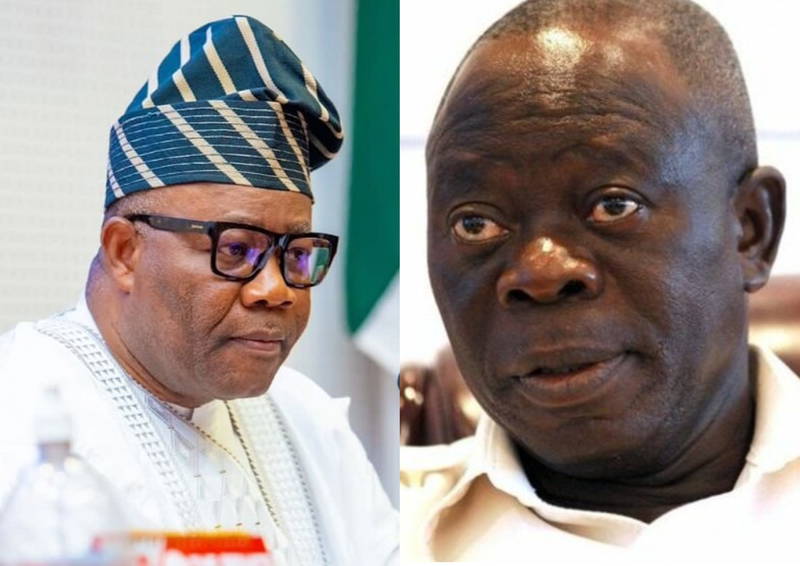
A fresh row broke out in the Nigerian Senate on Wednesday as Senate President Godswill Akpabio and Senator Adams Oshiomhole engaged in a heated exchange over newly amended rules governing the election of presiding officers in the upper chamber.
The dispute followed the Senate’s decision on Tuesday to amend its standing rules, introducing a provision that only senators who have served at least two consecutive terms, amounting to eight uninterrupted years, would be eligible to contest for leadership positions such as Senate President and Deputy Senate President.
The amendment, which emerged after a closed-door session lasting over three hours, is widely seen as a significant shift in the chamber’s leadership framework and, if upheld, would effectively bar Oshiomhole, a first-term senator and former Edo State governor, from contesting for any presiding office in the current dispensation.
Tensions rose during plenary when Oshiomhole attempted to raise a point of order to challenge the development.
However, Akpabio declined to recognise him and proceeded with the confirmation of the Senate’s Votes and Proceedings from the previous day.
Despite repeated attempts to be heard, Oshiomhole was overruled, and his microphone was switched off as the Senate leadership moved to maintain order.
The situation escalated as the lawmaker continued to interject from his seat, drawing the intervention of the Senate Chief Whip, Mohammed Monguno, who urged him to comply with the chamber’s rules.
“Be guided,” Monguno cautioned, invoking his authority as Chief Whip, but the admonition did little to immediately calm the situation.
In his response, Akpabio reiterated the powers vested in the office of the Senate President to regulate proceedings, enforce discipline and interpret the rules of the chamber.
He also reminded members of the need to maintain decorum during plenary.
“If any member becomes unruly in the Senate, such a member will be asked to leave. This is the final warning,” Akpabio said, addressing the chamber.
The tension was further heightened when Senator Patrick Ndubueze raised concerns over what he described as an omission in the Votes and Proceedings, alleging that a resolution reflected in the document had neither been debated nor formally adopted.
Akpabio, however, dismissed the objection and proceeded to put the confirmation of the proceedings to a voice vote, which was subsequently carried.
The amended rule, which restricts eligibility for top leadership positions to senators with uninterrupted service of at least eight years, is expected to shape internal power dynamics within the Senate and influence alignments ahead of future leadership contests.