
By David Akinadewo-Adekahunsi
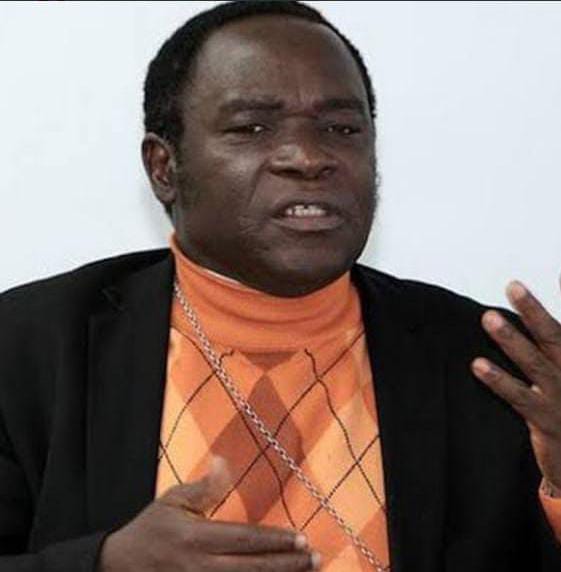
The Vatican has appointed Bishop Matthew Hassan Kukah to the Dicastery for Promoting Integral Human Development, reinforcing his role in shaping the Catholic Church’s response to pressing global social and ethical challenges.
The appointment, conveyed in a formal letter issued on Tuesday by Pope Leo XIV, was transmitted through the Secretariat of State and signed by Pietro Parolin, underscoring its significance within the Church’s global governance structure.
Bishop Kukah will serve a five-year term on the influential Vatican body, which is tasked with promoting Catholic social teaching across a wide spectrum of issues, including environmental protection, human rights, migration, economic justice and the welfare of vulnerable populations worldwide.
His reappointment follows an earlier nomination in 2022 during the reconstitution of the Dicastery by Pope Francis, signalling sustained confidence in his contributions to interfaith dialogue, governance and advocacy on justice, peace and ethical leadership.
The Dicastery plays a central role in coordinating the Church’s engagement with global concerns such as climate change, forced migration and widening inequality, while also interfacing with governments, international organisations and civil society actors to advance human dignity and sustainable development.
Bishop Kukah joins a diverse group of Cardinals, Archbishops and Bishops drawn from across continents, reflecting the Church’s universal outlook.
Among them are Robert Walter McElroy, noted for his advocacy on social justice and pastoral inclusion, and Matteo Zuppi, widely recognised for peacebuilding and mediation efforts in conflict zones.
Other members include Konrad Krajewski, known for extensive charitable outreach, and Fulgence Muteba Mugalu of the Democratic Republic of Congo.
In addition, the Council announced the appointment of Emmanuel Okechukwu to serve alongside clergy, religious and lay experts within the Dicastery’s operational framework, bringing multidisciplinary perspectives to its deliberations.
Reacting to his reappointment, Bishop Kukah expressed gratitude and humility, describing the opportunity as a call to deeper service.
“I am deeply humbled by this appointment and the trust placed in me by the Holy Father,” he said, adding that the Dicastery’s mandate aligns closely with his lifelong commitment to advancing justice, human dignity and confronting the dangers of human greed.
Before his involvement with the Dicastery, Bishop Kukah had a long record of service in interreligious engagement.
He was first appointed to the Pontifical Council for Interreligious Dialogue in 1996 by Pope John Paul II and was reappointed in 2005 by Pope Benedict XVI, serving for a decade.
During that period, he participated in high-level global dialogues aimed at strengthening relations between the Catholic Church and other religious traditions, including involvement in a Vatican delegation to Qatar during the establishment of diplomatic relations in 2005.
He also served on the advisory board of the King Abdullah bin Abdulaziz International Centre for Interreligious and Intercultural Dialogue from 2018 to 2025, contributing to initiatives promoting peaceful coexistence and religious tolerance across diverse regions.
The latest appointment is seen as further recognition of Bishop Kukah’s growing influence within global Catholic circles and his continued advocacy on issues of justice, peace and inclusive development.