
By David Akinadewo-Adekahunsi
The Federal Ministry of Information and National Orientation has said that sweeping economic and governance reforms under the administration of Bola Ahmed Tinubu are boosting global confidence in Nigeria and deepening strategic partnerships, particularly with the United Kingdom.
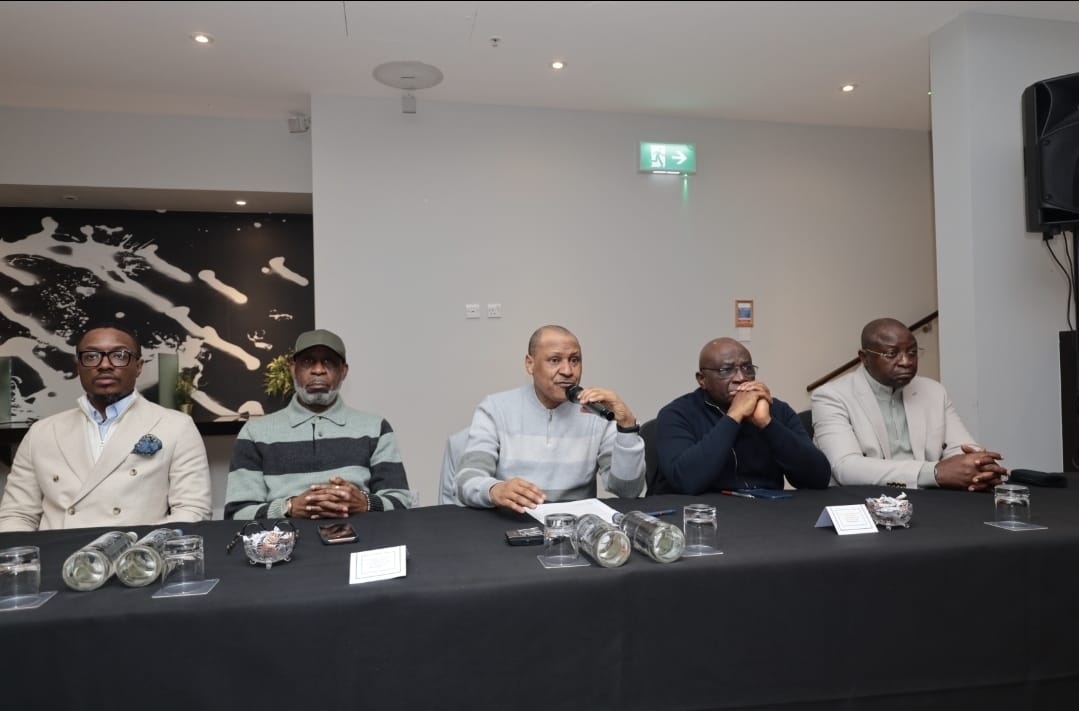
The Honourable Minister of Information and National Orientation, Mohammed Idris, made this known on Sunday in London during a World Press Conference ahead of President Tinubu’s official visit to the UK at the invitation of King Charles III.
Idris described the visit as a reflection of the enduring and strategic relationship between Nigeria and the United Kingdom, built on longstanding diplomatic, economic, cultural, and democratic ties.
He said the engagement would further strengthen collaboration in critical areas such as trade and investment, security, climate action, education, and technological innovation.
Highlighting Nigeria’s democratic journey, the Minister noted that the country has sustained over two decades of uninterrupted civilian rule since 1999, supported by strong institutions, an active civil society, and a vibrant media landscape.
He stated that the Tinubu administration remains committed to ensuring that democracy delivers tangible benefits to citizens through its Renewed Hope Agenda, which focuses on economic stabilisation, expanded opportunities, strengthened social protection, and long-term national development.
According to Idris, key reforms introduced by the government, including the removal of petrol subsidy and the unification of multiple foreign exchange windows, have enhanced fiscal transparency, improved economic sustainability, and increased investor confidence.
He added that these measures, alongside executive orders in the oil and gas sector, have positioned Nigeria as Africa’s leading destination for oil and gas investments for two consecutive years, attracting over eight billion dollars in Final Investment Decisions from international firms.
The Minister disclosed that Nigeria is set to launch a Customs Single Window, a digital platform designed to integrate trade processes, streamline documentation, and enhance efficiency in international commerce.
He also announced that Nigeria has exited the grey list of the Financial Action Task Force after implementing robust reforms to tackle money laundering and illicit financial flows, thereby strengthening the country’s standing in the global financial system.
In the mining sector, Idris said ongoing reforms are focused on improving transparency, eliminating speculative licence holding, and attracting serious investors to develop Nigeria’s mineral resources.
Providing insight into economic indicators, the Minister said early gains from the reforms are already visible, noting improvements in investor confidence across sectors.
He revealed that inflation has significantly declined since 2023, while the country’s trade surplus continues to expand.
He added that the Central Bank’s Purchasing Managers’ Index has recorded sustained growth over the past fifteen months, indicating renewed momentum in manufacturing and services.
He further disclosed that Nigeria’s external reserves have surpassed 50 billion dollars as of February 2026, with part of the reserves now held in gold as part of diversification efforts.
On infrastructure, Idris highlighted major ongoing projects, including the Lagos–Calabar Coastal Highway, Sokoto–Badagry Super Highway, and the Ajaokuta–Kaduna–Kano Gas Pipeline, all aimed at improving connectivity and driving industrial growth.
In the power sector, he noted that initiatives such as the Presidential Power Initiative, Presidential Metering Initiative, and the establishment of a Grid Asset Management Company are targeted at expanding electricity access and improving energy infrastructure nationwide.
The Minister also emphasised the government’s focus on human capital development, stating that the Nigerian Education Loan Fund has enabled over one million students to access higher education without upfront tuition payments.
On security, Idris said the government has strengthened intelligence sharing and operational coordination among security agencies to combat terrorism, banditry, and organised crime, while also enhancing cooperation with international partners, including the United Kingdom and the United States.
He added that Nigeria’s Navy, ranked as Africa’s strongest naval force in the 2026 Global Firepower Index, is spearheading the creation of a Combined Maritime Task Force to secure the Gulf of Guinea.
The Minister reaffirmed Nigeria’s commitment to religious freedom, national unity, and peaceful coexistence, noting that the country’s diversity remains a key strength.
He also stressed Nigeria’s continued leadership role in regional and global affairs, particularly in peacekeeping, diplomacy, and addressing global challenges such as climate change, migration, and energy security.
Reiterating Nigeria’s openness to investors, Idris assured that government policies support transparency, tax incentives, and full repatriation of profits, adding that the country looks forward to strengthening its partnership with the United Kingdom in the years ahead.