
By David Akinadewo-Adekahunsi
President Bola Ahmed Tinubu has suspended the newly introduced cashless payment system at airport toll gates nationwide following widespread gridlock that left passengers stranded and caused many to miss their flights.
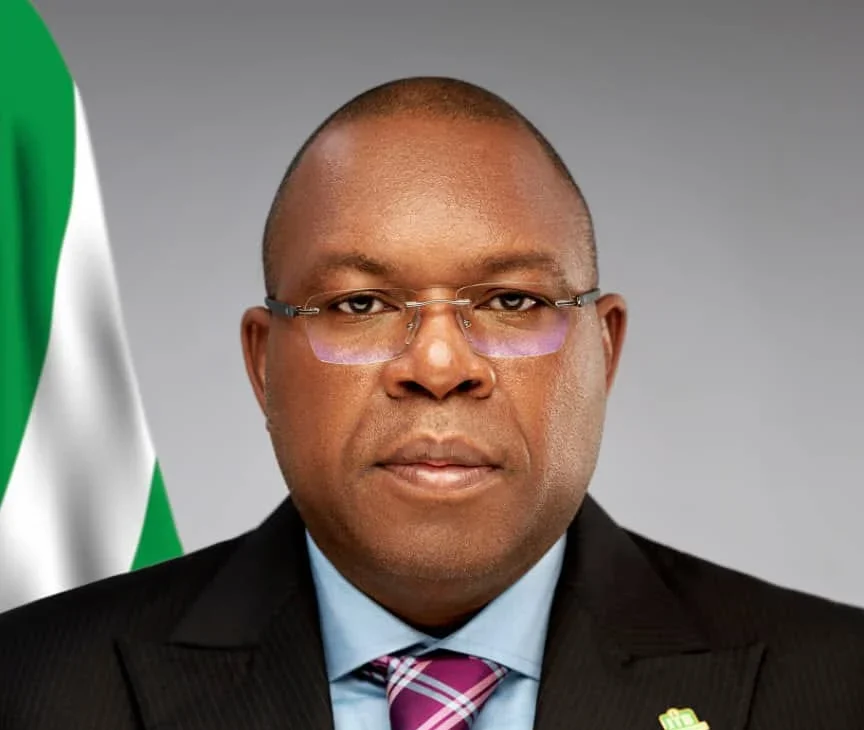
The Minister of Aviation and Aerospace Development, Festus Keyamo, announced the decision on Wednesday after the Federal Executive Council meeting at the State House, Abuja, stating that the President had directed an immediate return to the previous arrangement pending the development of a more efficient system.
According to the minister, the President acted out of concern for the welfare of Nigerians who were adversely affected by the traffic congestion at airport access points, particularly in Lagos and Abuja.
“Mr. President was very concerned about the welfare of Nigerians and the fact that most Nigerians were losing their flights, missing their flights,” Keyamo said, adding that the suspension was intended to eliminate the gridlock that had resulted from the implementation of the policy.
He clarified that the decision was not an endorsement of the old cash-based regime but a temporary corrective measure to ease the suffering of airport users.
“The major reason why Mr. President took this decision is to eliminate the present gridlock that we are experiencing, especially at both the Lagos and Abuja toll gates leading to the airport. That’s the major reason, not that the President is happy with the cash system,” he stated.
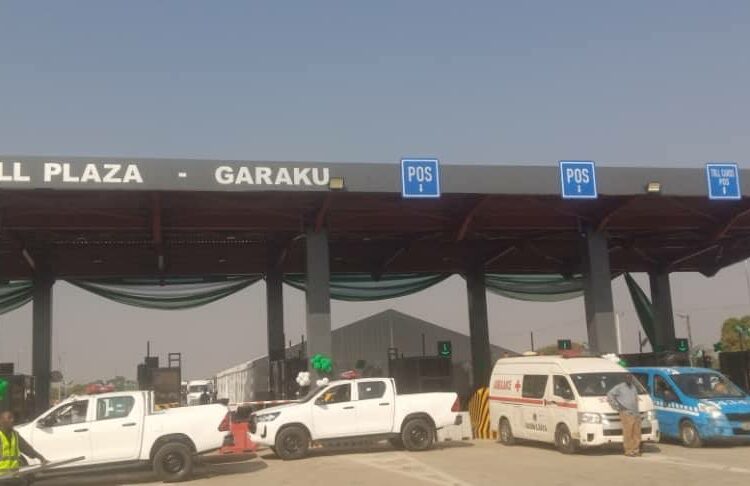
The cashless payment system, introduced less than a week ago by the Federal Airports Authority of Nigeria (FAAN), was designed to curb corruption and optimise revenue collection at airport toll gates, parking facilities and other revenue points.
For more than five decades, FAAN had relied largely on cash transactions at such points, a method critics described as susceptible to fraud and revenue leakages.
Under the new system, motorists were required to obtain prepaid cards or use electronic payment platforms before accessing airport toll gates.
However, inadequate infrastructure and user unfamiliarity with the payment channels reportedly led to severe bottlenecks, with traffic queues stretching several kilometres from the gates.
Social media was flooded with videos and complaints from travellers who reported spending hours in traffic and, in some cases, missing scheduled flights.
Keyamo disclosed that the President had directed the ministry to urgently refine the model and revert with a workable solution within a short timeframe.
“In fact, the President directed me that this should not take too long. It should not take too long, and I should get back to him on this issue,” he said.
As an interim measure, the government will adopt a hybrid approach, allowing both cash payments and the continued use of FAAN-issued prepaid cards already in circulation.
“We are going to do a hybrid system whereby we can collect cash temporarily and, of course, use the cards that they have collected temporarily for now,” the minister explained.
He further revealed that private sector operators would be engaged to develop a more efficient electronic revenue collection framework capable of eliminating cash transactions without creating congestion.
According to him, the President has indicated readiness to pay commissions if necessary to ensure the deployment of a seamless, technology-driven system.
The Lagos and Abuja airports, which account for the highest passenger traffic in the country, were the worst hit by the disruption, with travellers reportedly arriving several hours earlier than usual to avoid missing flights.
While FAAN had justified the policy shift as a transparency measure aimed at blocking leakages and enabling real-time revenue tracking, the operational challenges that followed its rollout prompted the presidential intervention.
No timeline was given for the reintroduction of a revised cashless system, but the minister emphasised that the matter would be treated with urgency.