
By David Akinadewo-Adekahunsi
President Bola Ahmed Tinubu on Thursday advanced Nigeria’s economic diplomacy with the United Kingdom, securing a £746 million agreement to refurbish two of the country’s busiest seaports in Lagos, in what both nations described as a significant step towards strengthening bilateral trade and investment relations.
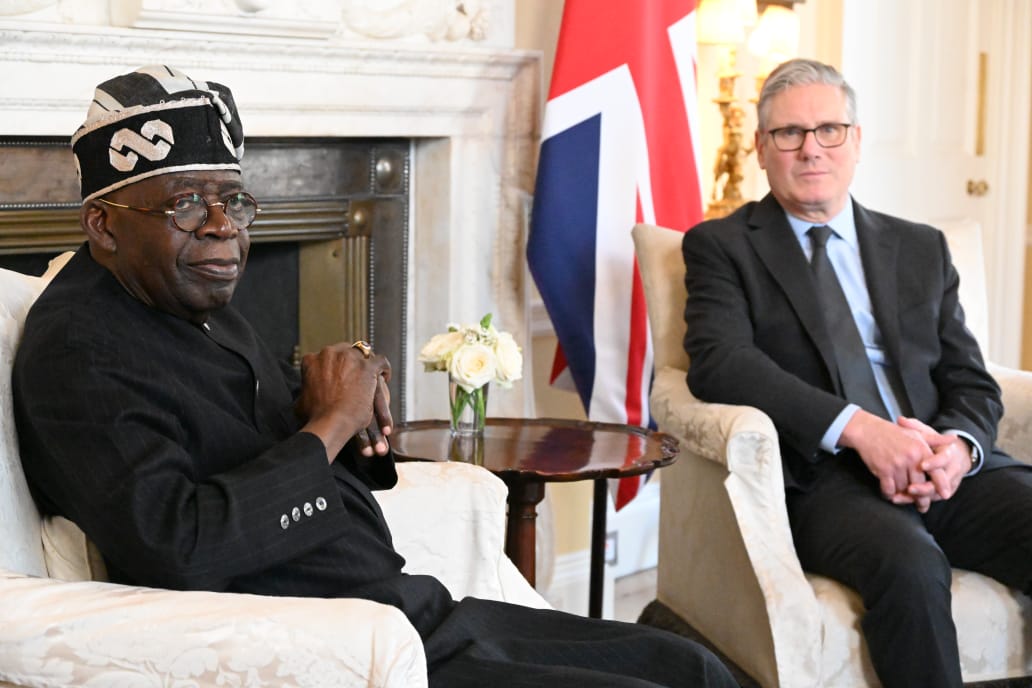
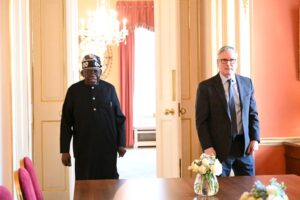
The deal was reached during high-level talks in London between President Tinubu and the British Prime Minister, Keir Starmer, at Downing Street, as part of the Nigerian leader’s state visit, the first by a Nigerian President to the United Kingdom in 37 years.
At the heart of the agreement is the modernisation of infrastructure at the Apapa and Tin Can Island ports, long regarded as critical gateways for Nigeria’s international trade but plagued by congestion, ageing facilities and operational inefficiencies.
The intervention is expected to significantly enhance cargo handling capacity, improve turnaround time for vessels, and boost overall economic activity.
Speaking ahead of the bilateral discussions, President Tinubu described the visit as “very thrilling and significant”, stressing the need for both countries to build on their longstanding historical and institutional ties by deepening economic cooperation.
“We cannot forget the institutional development we have enjoyed over the years,” he said, noting that Nigeria is currently undertaking far-reaching economic reforms aimed at stabilising the economy and improving the welfare of its citizens.
He acknowledged the pressures facing the global economy, adding that Nigeria remains vulnerable to external shocks but is determined to work with international partners to mitigate their impact.
“The entire world is challenged, and Nigeria is not immune. Our priority remains the economy and the welfare of our people, and how we can work together to improve livelihoods,” the President said.
In his response, Prime Minister Starmer characterised the visit as historic and underscored the enduring relationship between both countries, particularly the strong cultural and human ties linking their populations.
He also highlighted the significance of a State Banquet hosted by King Charles III in honour of the Nigerian delegation, describing it as a reflection of the importance the United Kingdom attaches to its partnership with Nigeria.
Starmer noted that existing collaboration between the two countries already spans key sectors, including trade, defence and security, and said the new agreements on exports and business exchanges demonstrate a shared commitment to expanding cooperation in response to evolving global challenges.
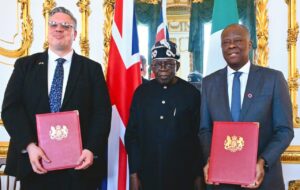
The formal signing of the port refurbishment agreement took place later at Lancaster House, where President Tinubu, accompanied by the First Lady, Senator Oluremi Tinubu, witnessed the ceremony.
Nigeria’s Minister of Finance and Coordinating Minister of the Economy, Wale Edun, signed on behalf of the Federal Government, while Blair McDougall, Parliamentary Under-Secretary of State and UK Minister for Small Business and Economic Transformation, represented the British government.
Explaining the significance of the agreement, Edun said it aligns with the Federal Government’s priority focus on infrastructure development, energy expansion and industrial growth.
He added that deepening bilateral partnerships remains essential to attracting the scale of investment required to drive economic recovery, generate employment and reduce poverty.
According to him, the agreement reflects growing confidence in Nigeria’s economic direction and underscores a renewed level of trust between both countries, with a clear emphasis on delivering measurable economic outcomes.
Analysts say the refurbishment of the Apapa and Tin Can Island ports could mark a turning point for Nigeria’s maritime sector, which has long struggled with inefficiencies that increase the cost of doing business and undermine competitiveness.
Improved port infrastructure is expected to ease logistical bottlenecks, facilitate trade flows and strengthen Nigeria’s position as a regional economic hub.
The development also signals a broader push by the Tinubu administration to leverage strategic international partnerships to support its reform agenda under the Renewed Hope framework, particularly in critical sectors capable of stimulating growth and enhancing national productivity.
For both Nigeria and the United Kingdom, Thursday’s agreement represents not only a reinforcement of historical ties but also a forward-looking commitment to shared prosperity in an increasingly uncertain global economic environment.