
By David Akinadewo-Adekahunsi
In a nation that prides itself on deep religiosity and public piety, a troubling pattern continues to stain the conscience of the country: fellow citizens hunted, humiliated, imprisoned or killed in the name of defending God.
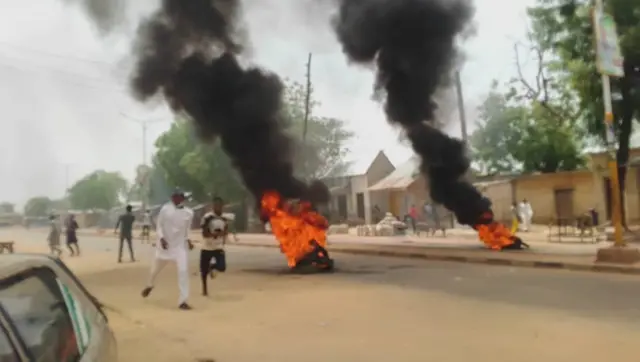
Across markets, classrooms, courtrooms, police stations and social media platforms, allegations of “blasphemy” often vague, disputed or entirely fabricated, have ignited mob violence and harsh prosecutions.
What emerges from the documented record is not merely a series of isolated tragedies, but a recurring indictment of how religious sentiment can be manipulated to justify cruelty against fellow human beings.
Human rights organisations, including Amnesty International, have documented at least 91 victims of mob action under religious pretexts between 2017 and 2024 alone.
Behind each statistic is a name, a face, a family, and in many cases, a haunting question: what exactly was said or done that warranted death?
On May 12, 2022 in Sokoto, Deborah Samuel Yakubu posted a message in a WhatsApp group: “Jesus Christ is the greatest. He helped me pass my exams.” When pressured to retract, she reportedly refused. Within hours, she was lynched by fellow students, stoned, beaten and burned alive. The digital message became a death sentence.
Six years earlier in Kano, Bridget Agbahime’s alleged offence was asking a man performing ablution in front of her shop to move so she could close for the day. Christian leaders later insisted she uttered no blasphemy. She was beaten to death by a mob said to number more than 500.
In Abuja on July 9, 2016, Eunice Olawale was conducting early-morning street evangelism. According to her husband, she had previously been warned about her preaching near a mosque. She was attacked around 5:00 a.m. and fatally stabbed, left beside her Bible and megaphone. Her “crime” was public proclamation of faith.
Christiana Oluwasesin, a teacher in Gombe, said nothing at all. On March 21, 2007, she collected students’ bags before an examination to prevent cheating. A pupil alleged that her bag contained a Quran and that a Christian teacher touching it was desecration. No Quran was ever verified. A mob, including students, killed her and burned her body.
In December 1994 in Kano, Gideon Akaluka was accused after his wife allegedly used paper rumoured to contain Quranic verses to clean their baby. Reports later indicated the claim was false. A mob stormed the police station where he was being held for protection and killed him.
The pattern repeats. In Bauchi in March 2021, Talle Mai Ruwa was dragged from a police post and beaten to death over an alleged insult to the Prophet Muhammad, though the exact words were never reliably documented.
In Abuja in June 2022, a man known as “Small Hundaru” was lynched following an argument in which he allegedly made a blasphemous remark; again, no verified transcript of the words exists.
On June 25, 2023 in Sokoto, Usman Buda was stoned to death in a market after conflicting accounts of an argument. Amnesty International later reported that the accusation appeared fabricated, possibly rooted in personal rivalry rather than theology. The killing was filmed. Children were visible in the crowd.
The violence has not been confined to mobs alone. In Kano in 2020, Yahaya Sharif-Aminu circulated song lyrics via WhatsApp that some considered blasphemous. His home was burned. He was sentenced to death by hanging by a Sharia court and has remained entangled in prolonged legal proceedings. Mubarak Bala, president of the Humanist Association of Nigeria, received a 24-year prison sentence in 2022 over Facebook posts deemed blasphemous.
Rhoda Jatau spent 19 months in detention after sharing a WhatsApp video condemning the killing of Deborah Samuel. She was acquitted in December 2024. In January 2025, Sadiq Mani Abubakar faced the torching of his home and suspension from work over a decade-old Facebook post questioning aspects of the Quran. He survived, but only after fleeing for his life.
In Niger State in August 2025, a woman identified as Ammaye was reportedly killed after a remark — the precise wording undocumented — was deemed blasphemous by bystanders during a casual exchange.
A grim pattern is evident: in many cases, the exact allegedly blasphemous words were never independently verified. In several instances, the accused said nothing at all. Disputes over business competition, personal grievances, or social tensions were reframed as religious insult. Mob verdicts were delivered before any investigation. Police custody, intended for protection, became a holding space before execution by crowd.
The tragedy is compounded by the contradiction at the heart of these acts. Every major religious tradition represented in Nigeria teaches reverence for life, justice and mercy. Yet mobs have invoked divine honour while extinguishing human lives.
The constitutional guarantee of freedom of expression and religion stands in uneasy tension with the enforcement — formal and informal — of blasphemy norms in parts of the country. Where law is overshadowed by mob impulse, and accusation replaces evidence, fear becomes a governing force.
What these cases ultimately reveal is not merely religious zeal, but the darker capacities of humanity: how quickly moral certainty can slide into brutality; how easily faith can be weaponised; how silence or inaction can normalise cruelty.
The victims named above are not abstractions. They were traders, teachers, students, preachers, fathers and mothers. Their deaths, or imprisonments, challenge Nigeria to confront an uncomfortable question: when devotion to God produces hatred of neighbour, what exactly is being defended?
Until the state consistently upholds the rule of law, protects the accused, prosecutes mob leaders, and reinforces the sanctity of human life above sectarian passion, the cycle may continue. And each new accusation, documented or not, risks becoming another spark in a country already burdened by too many graves dug in the name of belief.