
By David Akinadewo-Adekahunsi
The latest attack on Nigerian troops in Benisheikh, Borno State, is not just another tragic entry in the country’s long ledger of insurgency, it is a painful reminder of a war that refuses to end, and a policy environment that continues to struggle between rhetoric and decisive action.
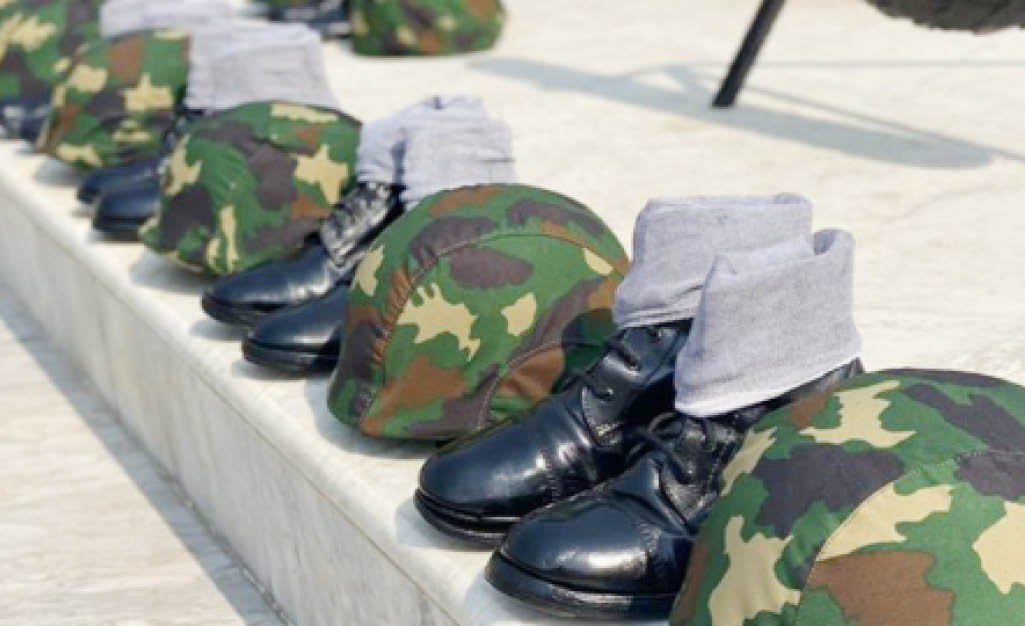
In the early hours of April 9, 2026, terrorists linked to Boko Haram and Islamic State West Africa Province launched a coordinated assault on the camp of the 29 Task Force Brigade under Operation HADIN KAI in Benisheikh. By the time the guns fell silent, several soldiers had been killed, including the Brigade Commander, Brigadier-General Oseni Omoh Braimah.
It was a devastating blow, not only to the military but to a nation already fatigued by years of bloodshed.
President Bola Ahmed Tinubu, in a swift reaction, described the fallen soldiers as “unforgettable heroes,” praising their courage and sacrifice while urging the armed forces not to be discouraged.
His message, solemn and respectful, echoed a familiar tone that Nigerians have heard time and again in the aftermath of such tragedies: condolences, commendation, and a renewed pledge to defeat terrorism.
Yet, beneath the solemnity of these words lies a growing question among citizens: when will the response go beyond mourning and motivation to measurable, preventive action?
The contradiction is becoming increasingly difficult to ignore. On one hand, the nation is told that insurgents are weakened, on the run, and acting out of desperation. On the other, they continue to mount sophisticated attacks on military formations, killing highly trained personnel and even senior commanders. The Benisheikh assault is not the signature of a defeated enemy; it is the mark of a resilient and adaptive threat.
What makes the situation even more troubling is the broader policy narrative that has, in recent times, leaned towards reintegration and reconciliation. Statements by the National Security Adviser, Nuhu Ribadu, and the Chief of Army Staff, Taoreed Lagbaja, describing terrorists as “our children” have added a layer of moral and strategic ambiguity to the fight against insurgency.
While such language may be intended to encourage defections or support deradicalisation efforts, it sits uneasily alongside scenes of carnage like the one in Benisheikh. It raises a difficult but necessary question: can a state afford to humanise those who continue to dehumanise its citizens and soldiers?
Beyond the North-East theatre, the pain of insecurity is neither distant nor abstract. In Ondo State, communities have, within the same week, grappled with renewed violence. In the outskirts of Akure, a poultry farmer and her daughter were reportedly killed in a brutal attack that has left residents shaken and fearful. The incident adds to a growing list of security breaches that have steadily eroded the sense of safety in what was once considered a relatively calm region.
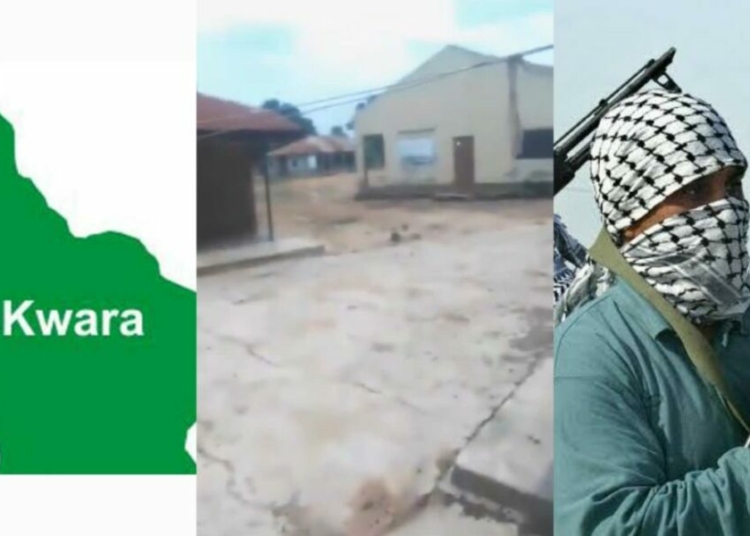
Similarly, in Kwara State, entire communities are said to be emptying out as residents flee persistent attacks and abductions by armed groups. Homes abandoned, livelihoods disrupted, and social structures fractured, these are no longer isolated occurrences but symptoms of a wider national crisis that cuts across geographical and cultural boundaries.
In Plateau State, the story is equally grim. Recurrent attacks on rural communities have left scores dead and many others displaced in what has become a troubling cycle of violence. Villages have been razed, families torn apart, and survivors left to grapple with loss and uncertainty.
These attacks, often described in official language as “communal clashes,” increasingly bear the hallmarks of organised and targeted violence, raising fresh concerns about the capacity of the state to protect vulnerable populations.
Across other parts of the country, from the forests of the North-West to pockets of the North-Central and even sections of the South-East, the pattern is unmistakable: armed groups operate with alarming boldness, exploiting gaps in intelligence, coordination, and response.
From the forests of the North-West to the agrarian belts of the South-West, a troubling pattern is emerging: the gradual normalisation of insecurity. And in the face of this, many Nigerians are beginning to question not just federal responses, but also the role of state governments.
While it is true that Nigeria’s policing architecture remains highly centralised, this structural limitation cannot continue to serve as a convenient alibi for inaction at the subnational level. Governors, as chief security officers of their states, possess both the political authority and the moral responsibility to act—if not through direct command of security agencies, then through strategic support and resource mobilisation.
The reluctance or inability of some state governments to fully empower local security initiatives is becoming increasingly difficult to justify. In the South-West, for instance, the Amotekun Corps was established as a regional response to rising insecurity. Yet, its effectiveness varies significantly across states, often reflecting the level of political will and financial commitment behind it.
Local vigilante groups, despite their limitations, remain critical first responders in many rural communities. They understand the terrain, the people and the evolving tactics of criminal elements. What they often lack, however, is the institutional backing, training, and logistical support needed to operate effectively and within the bounds of the law.
To ignore these grassroots structures is to overlook a vital layer of Nigeria’s security ecosystem. Strengthening them does not undermine the authority of federal agencies; rather, it complements it.
Security, in a country as vast and complex as Nigeria, cannot be sustained through central command alone. It requires a decentralised, intelligence-driven approach that integrates national strategy with local realities.
The Benisheikh attack, the killings in Akure, the displacement in Kwara, and the bloodshed in Plateau all point to one inescapable conclusion: Nigeria’s security challenges are interconnected, and so must be its solutions.
For the families of the fallen soldiers, the grief is immediate and personal. For affected communities, the fear is constant and corrosive. But for those in positions of authority, this moment demands more than sympathy, it demands strategy, coordination, and above all, accountability.
The President’s assurance of increased support for the armed forces is necessary, but it must be matched by a broader, more coherent national security framework, one that aligns federal resolve with state-level action and community-based intelligence.
Equally important is the need for consistency in messaging. A nation cannot simultaneously pursue leniency for violent actors while struggling to contain their excesses on the battlefield and in civilian spaces. Clarity is not just a communication tool; it is a strategic imperative.
Nigeria has reached a point where incremental responses are no longer sufficient. The scale and spread of insecurity require bold, coordinated, and sustained intervention. Anything less risks prolonging a cycle that has already claimed too many lives.
The fallen soldiers in Benisheikh have been rightly honoured as heroes. But honour, if it is to mean anything, must be accompanied by resolve, the kind that prevents future loss, restores public confidence, and redefines the nation’s approach to security.
Until then, the distance between words and reality will remain dangerously wide.
David Akinadewo-Adekahunsi is a Nigerian journalist, author, musician and cleric with decades of experience covering governance, security, faith and social justice issues.