
By Duchess Ifeoluwa
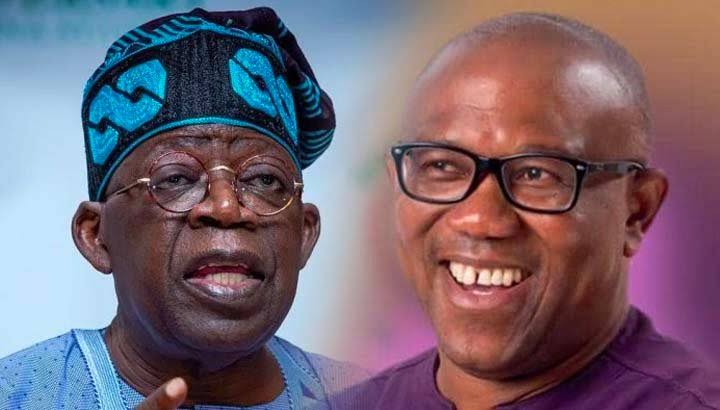
The Presidency has strongly rejected calls by Labour Party presidential candidate in the 2023 election, Peter Obi, for President Bola Ahmed Tinubu to resign from office, describing the demand as “childish,” “misplaced,” and an attempt to distract from the administration’s achievements.
In a statement issued on Monday, Special Adviser to the President on Information and Strategy, Bayo Onanuga, said Obi’s comparison of Nigeria’s political situation with the resignation of a British Prime Minister was fundamentally flawed because Nigeria operates a presidential system of government with fixed electoral terms.
According to the Presidency, recent electoral victories recorded by the ruling All Progressives Congress (APC) in the Ekiti State governorship election and several bye-elections across the country demonstrate that President Tinubu and his party continue to enjoy significant public support.
Onanuga argued that the election outcomes served as an indication of the people’s confidence in the administration and suggested that political opponents should await the 2027 general election to test public opinion rather than seek to pressure the President to leave office.
The presidential spokesman accused Obi of attempting to use social media to undermine democratic processes, insisting that leadership transitions in Nigeria must be determined through constitutional means.
Responding to criticisms of the administration’s handling of security challenges, the Presidency maintained that President Tinubu inherited long-standing security problems and has taken concrete steps to improve the situation across the country.
The statement noted that security agencies have intensified operations against terrorists, kidnappers and other criminal groups, leading to the rescue of numerous victims and the elimination of several criminal kingpins.
According to the Presidency, more than 15,000 terrorists have been neutralised through ongoing security operations, while investments in technology, surveillance equipment and drone deployment have strengthened the nation’s security architecture.
The administration also highlighted the appointment of a Special Adviser on Homeland Security as part of efforts to coordinate security interventions more effectively.
Onanuga further criticised Obi’s record as former governor of Anambra State, arguing that he lacked the moral authority to question the current administration’s security performance.
The Presidency also defended the government’s economic reforms, insisting that recent economic indicators point to progress rather than decline.
According to the statement, Nigeria has recorded positive Gross Domestic Product (GDP) growth since the commencement of Tinubu’s administration, while trade surpluses and foreign reserve levels have improved significantly.
The Presidency said foreign reserves have risen above $50 billion, while crude oil production has increased from below one million barrels per day to approximately 1.8 million barrels daily.
It further stated that federal revenue generation has witnessed substantial growth, with collections projected to exceed N30 trillion this year compared to N7.7 trillion recorded in 2022.
The statement noted that increased revenues have enhanced the financial capacity of state governments to undertake development projects in critical sectors such as healthcare, education, housing and infrastructure.
On the investment front, the Presidency pointed to growth in the capital market, saying the Nigerian Exchange has witnessed significant expansion, creating wealth for millions of investors and boosting confidence in the economy.
It also cited increased foreign direct and portfolio investments as evidence of growing investor confidence in the country’s economic direction.
The statement highlighted major infrastructure projects being undertaken by the administration, including the Lagos-Calabar Coastal Highway and the Sokoto-Badagry Super Highway, describing them as transformative projects that had remained unrealised for decades.
The Presidency also defended the government’s energy policies, particularly the introduction of compressed natural gas (CNG) initiatives aimed at reducing transportation costs and dependence on petrol and diesel.
Onanuga further referenced the student loan scheme, which provides interest-free loans to tertiary institution students, as one of the administration’s key interventions in the education sector.
He noted that the country has not experienced disruptions to academic activities by university-based unions such as ASUU and NASU since Tinubu assumed office, describing it as evidence that campaign promises made to students were being fulfilled.
Addressing claims regarding electricity supply, the Presidency accused Obi and his supporters of repeatedly misrepresenting Tinubu’s campaign statements.
The statement explained that the President never promised immediate 24-hour electricity nationwide but pledged to improve power supply and eliminate estimated billing practices.
According to Onanuga, one of the administration’s earliest actions was the signing of the Electricity Act, which empowers states to generate, transmit and distribute electricity independently of the national grid.
The government also cited efforts to deploy millions of prepaid meters and expand off-grid solar energy solutions for schools, hospitals and markets across the country.
While acknowledging the challenges posed by the high cost of living, the Presidency argued that inflationary pressures are not unique to Nigeria and have been worsened by international developments, including tensions in the Middle East and disruptions to global supply chains.
The statement maintained that the administration remains focused on implementing solutions rather than engaging in political rhetoric.
Describing Obi’s call for resignation as politically motivated, the Presidency said it amounted to grandstanding rather than constructive criticism.
Onanuga insisted that President Tinubu remains committed to implementing reforms, improving security, stabilising the economy and laying the foundation for long-term national prosperity.
He concluded by expressing confidence that Nigeria is making steady progress under the current administration and dismissed Obi’s criticisms as disconnected from realities on the ground.