
By David Akinadewo-Adekahunsi
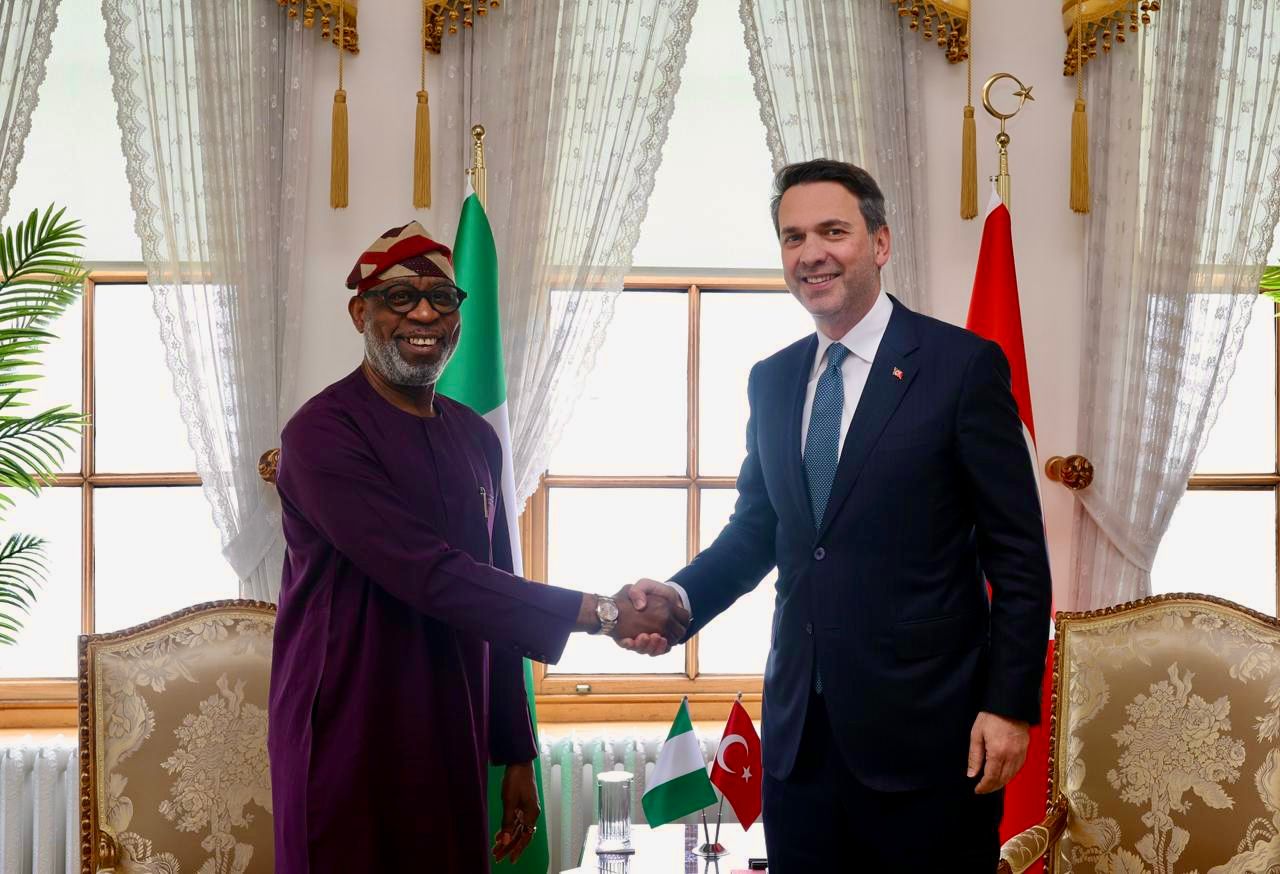
Nigeria and the Republic of Türkiye have signed a Memorandum of Understanding (MoU) aimed at strengthening bilateral cooperation in the solid minerals sector, in a move expected to deepen economic relations and expand investment opportunities between both countries.
The agreement was signed on the sidelines of the Istanbul Natural Resources Summit (INRES) held in Istanbul, Türkiye.
Speaking during the signing ceremony, Nigeria’s Minister of Solid Minerals Development, Dele Alake, said the Federal Government was prepared to leverage Türkiye’s technological advancement and expertise in mining exploration, digitisation, licensing systems, training and capacity building to accelerate reforms and growth in Nigeria’s mining sector.
Alake stated that President Bola Ahmed Tinubu had given full support to efforts aimed at strengthening bilateral cooperation with Türkiye in the mining and energy sectors.
“Türkiye is one of the countries we are confident of building strong bilateral cooperation with, particularly in the area of solid minerals development. Nigeria is open to working with the Turkish government to strengthen governance structures, improve technical capacity, and advance sustainable mining development in our country,” the minister said.
The minister, who also serves as Chairman of the Africa Minerals Strategy Group (AMSG), noted that reforms introduced in Nigeria’s solid minerals sector over the past three years had significantly improved the operating environment and increased investor confidence.
According to him, the Federal Government had implemented measures aimed at sanitising the mining sector, improving ease of doing business and creating incentives for genuine foreign investors willing to establish long-term operations in Nigeria.
“We have significantly improved the ease of doing business and strengthened institutional support for investors. Investors can now repatriate profits after due process, while government incentives have continued to attract serious mining stakeholders into Nigeria,” he stated.
Alake disclosed that the reforms had already attracted increased Foreign Direct Investment (FDI) into the sector, while reiterating the government’s commitment to ensuring security and lawful mining operations across the country.
He said the specially established Mining Marshals had intensified operations against illegal mining activities nationwide.
“As of the latest count, over 300 illegal mining operators, including foreign nationals, have been arrested, while more than 150 prosecutions are currently ongoing. In addition, over 100 illegal mining sites have been recovered and returned to legitimate licence owners,” he said.
Responding, Türkiye’s Minister of Energy and Natural Resources, Alparslan Bayraktar, described the partnership with Nigeria as strategic and timely, especially at a period when global energy security requires stronger international collaboration.
Bayraktar commended the Nigerian government for the reforms introduced in the solid minerals sector and expressed the readiness of Turkish companies to invest in Nigeria.
“We are ready to invest in Nigeria because of the remarkable initiatives your government has put in place. We look forward to cooperation, support, and guidance that will enable both countries achieve meaningful results,” he said.
The Turkish minister further revealed that several Turkish industrial manufacturers and energy firms were interested in expanding operations into Nigeria beyond mining activities, particularly in hydrocarbons and energy infrastructure.
“Nigeria is a major player in the hydrocarbon industry. We would appreciate it if you convey to your President our desire to renew energy cooperation and contracts with Nigeria,” Bayraktar added.
He also described Nigeria as a strategic gateway for Türkiye’s broader economic and energy engagement with African markets.
Meanwhile, speaking during a panel session titled “Energy Security in a Shifting Global Landscape: Connectivity and Cooperation,” Alake stressed the importance of global peace and conflict reduction as necessary conditions for sustainable energy security.
“Without reducing conflicts around the world, economic imperatives and global energy security efforts will continue to face significant challenges. Without peace, discussions around energy security become difficult,” the minister said.